
DINA LEE
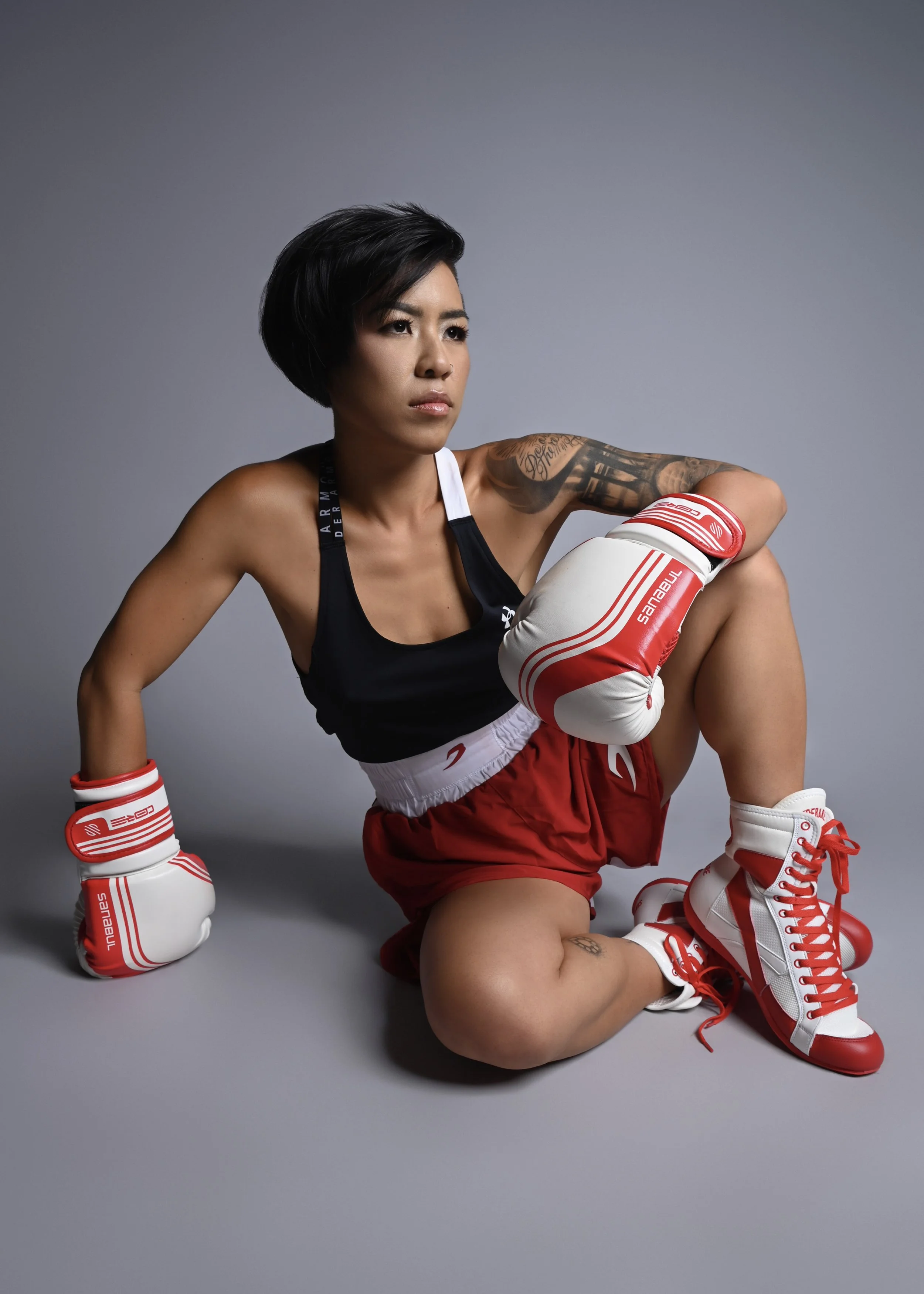
“At some point, I realized I wasn’t simply following a vegan diet anymore. I was living a life that naturally reflected those choices. I don’t feel the need to preach about it–I’d rather let the way I live speak for itself. For me, that’s when veganism really became part of my identity.”
Dina Joy is a vegan model, artist, athlete, and combat sports ring girl who has been vegan for over a decade. A lifelong creative with a passion for fitness and martial arts, she combines strength, femininity, and athleticism both in front of the camera and in her training. She is also a gardener and YouTube creator, growing much of her own food and sharing her journey of building a strong, intentional life rooted in compassion. Outside of work, she loves spending time with her husband and their two dogs and two cats.
What was the moment or experience that first pushed you toward veganism?
My husband showed me a chick culling video. For anyone who doesn’t know, male chicks in the egg industry are considered economically useless and are routinely killed shortly after hatching. I had two boy dogs at the time and I made the connection that my boy dogs are no different than those boy chicks. I went vegan overnight.
Did your path into veganism come before or after you started training in combat sports?
Technically before, but my serious training started after I went vegan. I did a year of karate when I was about 11 and earned my blue belt. Went vegan in 2015, then trained in boxing/kickboxing/MMA for a year in 2022. In 2025, I decided to pursue a career in modeling but have continued solo/online training in martial arts weekly since ‘22. I also run, and do yoga and calisthenics. Couldn’t do all that without my vegan energy!
Was there a specific person, athlete, book, documentary, or experience that influenced your decision to go vegan?
No it was literally that chick culling video on YouTube. After I made the decision, influences like John Lewis (BADASS VEGAN), Dom Thompson, Derek Simnett, The Happy Pear, Natalie Matthews, Nimai Delgado, Forks Over Knives (DOC), The China Study (BOOK) all helped me stay vegan. They inspired me to do it in my own individual way too- like vegans aren’t all hippie-crunchy skinny folk- and once I began to realize that it shifted my perspective.
How did your friends, family, training partners, or community react when you made that shift?
Like I was a weirdo lol. So many questions about protein, and what I eat now. It was either lots of questions, or avoidance on the topic lol. I went vegan in 2015, so I wonder if people still get those questions as much today.
Was veganism an immediate commitment, or something you gradually grew into?
Immediate. I felt as if I had been lied to all my life and once that veil was lifted, 100% commitment to veganism.
What originally drew you to combat sports?
Growing up, I watched the original Mighty Morphin Power Rangers and I’d say that was a primary inspiration. Especially Trini, she was the first Asian character I saw in pop culture. I’m half Chinese, half Filipino, born and raised in North Carolina. So she was an early role model to me. Then later in life as an adult, I wanted a little cardio to do after my bodybuilding workouts. I hated running at the time (which I now love) so I tried out boxing. My husband brought home a heavy bag. I started doing 5 minutes of punching after lifting weights… and I fell in love.
Did becoming vegan change the way you approached training or competition?
Becoming vegan actually made me start training. I had so much energy after going vegan that I needed something to do with it all lol! 2015 I went vegan, 2017 I started lifting weights, 2022 started MMA. When I stopped eating animal products, I was also more clearheaded, like a hangover I had had all my life was lifted! I felt sharper, I recovered WAY faster, and felt lighter in general when it came to moving the body in ANY way. So my approach became more scientific and precise, just being able to think much clearer. The absence of animal products made both my mind and body stronger. The biggest difference, I’d say is recovery- between workouts, between sets, from any injuries, and just overall. So my training increased in volume. I’d say that is a HUGE benefit of being a vegan athlete.
Was there ever a point where you questioned whether veganism and being a competitive combat sports athlete could coexist?
No. I had already researched enough of the science to know that I was good, and had discovered other athletes performing with no issues.
When did veganism become more than just a personal dietary decision and become part of your identity?
Ooo great question. I think veganism became part of my identity gradually. When I first went vegan in 2015, it was a personal decision about what I wanted to eat and how I wanted to live. But over the years it became much bigger than my diet.
The more time I spent living this way, the more it connected with everything else I cared about—growing my own food, taking care of my body, being active, and becoming more conscious of where my food comes from. I started gardening and growing a lot of what I eat, and that gave me an entirely different relationship with food. It became less about restriction and more about creation.
As I became more involved in fitness, combat sports, and modeling, veganism took on another dimension for me. By that point, I already knew how to build a strong, healthy body and life as a vegan. What changed is that I had an opportunity to show other people what that could actually look like. I could be strong, athletic, feminine, and physically capable while being completely vegan. I realized that my body itself could be a representation of the lifestyle—not because I needed to prove anything, but because I wanted people to see that being vegan can make you strong in every sense of the word.
At some point, I realized I wasn’t simply following a vegan diet anymore. I was living a life that naturally reflected those choices. I don’t feel the need to preach about it–I’d rather let the way I live speak for itself. For me, that’s when veganism really became part of my identity.
For you, how connected are veganism and your approach to combat sports?
Veganism and combat sports both taught me that strength comes from discipline, consistency, and taking care of yourself. I approach both with the mindset that what you put into your body and how you train it directly affects what you’re capable of. In martial arts, that means fuleing for strength, endurance, recovery, and performance. With modeling, eating primarily a whole-food vegan diet supports things I value for my work, like healthy skin energy, recovery, and maintaining a strong, athletic physique.
Do your ethics influence the way you approach training and competition?
Absolutely. I think that’s why I train, but don’t compete. It’s only me vs. me every day lol. I never started martial arts and combat sports with the intention of harming anyone. For me, it’s about self-defense, discipline, and always being ready and capable of protecting myself or helping someone else if I need to.
Do you see veganism as an extension of the discipline required for combat sports, or do you see the two as completely separate?
Lol, I think the other questions pretty much covered this! I definitely see them as connected. Both require discipline, consistency, and being intentional about how you take care of yourself.
Has being vegan changed your understanding of strength?
Absolutely. Being vegan changed my understanding of strength both physically and mentally. I actually felt stronger after going vegan, which challenged beliefs I had held for a long time because they were simply part of the status quo. It also made me realize that strength isn’t just about how much muscle you have—it’s about the choices you make, your discipline, and having the conviction to live according to your values.
Combat sports are often associated with toughness, aggression, and traditional ideas of masculinity. Do you think veganism challenges any of those ideas?
Absolutely. I think we’re all constantly challenging traditional ideas of femininity and masculinity, and that’s different from sexual orientation. Those energies can exist in anyone, and combat sports are a great example of that—both women and men can be strong, aggressive when necessary, disciplined, compassionate, and vulnerable.
There have been times when I was the only woman training at my martial arts school, and I could feel how my presence changed the dynamic in the room. I think veganism challenges those traditional ideas in a similar way. It challenges the idea that toughness has to come from domination or causing harm. To me, real toughness can also mean having compassion, self-control, and the conviction to choose differently.
Have you ever had training partners or other athletes question whether a vegan diet could support serious training?
Yesss. Funny enough, this person recently apologized after doing research and said “I was right about the food.” But initially it was a lot of protein questions, and how do I get enough calcium, the typical questions about vegans get after making the switch. That was my main training partner so I also got to prove to her that my diet was supporting me because she could literally feel my strength anytime we did pad work. But that was early in my martial arts journey. Like I said, now I let my life and body do the talking.
How do you respond to the idea that someone needs to consume animal products to be strong, athletic, or competitive?
Someone wise once said, “Preach often; use words only when necessary.” So I prefer to let my approach and my results speak for themselves. I’ve been vegan for over a decade, I train regularly, practice martial arts, and continue to build a strong, athletic body. Even my work as a model gives me an opportunity to show people what’s possible. I don’t need to convince someone that veganism can make you strong—I can simply show them.I’d also just reference scientific studies lol.
Has veganism changed the way you think about the relationship between strength and compassion?
Absolutely. Veganism taught me that strength and compassion aren’t opposites—you can be physically strong while choosing compassion as a principle.
Do you think there is a contradiction in valuing discipline, respect, and control in martial arts while participating in animal exploitation?
For me, yes. Martial arts taught me that discipline, respect, and control are not just things you practice in the gym—they’re principles you carry into the rest of your life. Once I extended those principles beyond my own body and toward animals, I personally couldn't reconcile them with participating in their exploitation. If I believe I can live without causing unnecessary harm, then choosing not to is part of that discipline too.
What has combat sports taught you about discipline that has carried over into your commitment to veganism?
Combat sports have made me much more structured and intentional. Having goals in martial arts and with my physique has also made me more thoughtful about my nutrition–how I fuel, recover, and prepare for training. That same discipline carries over into veganism because I’m not just eating a certain way; I’m intentionally fueling myself for what I want my body to be capable of.
What role has the combat sports community played in shaping your beliefs or identity?
Combat sports have a way of pushing you beyond what you think you’re capable of. So does running. Because I’ve proven to myself that through consistency I can develop new martial arts skills, I’ve learned that I can apply that same mindset to the rest of my life. It’s taught me to trust the process, stay patient, and keep showing up even when growth isn’t immediately visible.
How did becoming vegan affect your relationship with your training community?
I didn’t have a training community when I went vegan. I did bodybuilding before combat sports, and I was SO often in the gym alone lol.
Have you ever felt like being vegan made you an outsider within combat sports culture?
No, because by the time I immersed myself in the culture, I was already confident in my vegan identity. I had spent years researching and following vegan athletes, and even though much of that was online, I had already seen enough to know that being vegan wasn’t going to limit me. I had all the confirmation I needed to feel confident in my choices, so I never felt like an outsider because of it.
Do you think veganism is still misunderstood within the broader combat sports communities?
Lol, I think veganism is still misunderstood everywhere, not just in combat sports. But I do think that can be amplified in a traditionally male-dominated culture where toughness and strength are often associated with consuming animal products. That’s part of why I think simply showing up, training hard, and being strong as a vegan can challenge those assumptions!
Have your training partners generally been curious and supportive, dismissive, or somewhere in between?
I trained for a year at Union Martial Arts, but other than that, I unfortunately don’t have training partners. I do most of my martial arts training solo at home, primarily on the heavy bag, while also using other drills.
At my martial arts school, other than talking to my main pads/sparring partner, there wasn’t time to talk about anything. The school was very structured and focused on doing the work, and honestly, I wasn’t the type of person to stay after class and socialize anyway. I’d rather stretch, recover, and get home.
Do you think combat sports culture has an opportunity to embrace more ethical approaches to strength and competition?
Yes I see a lot of athletes who genuinely just want to perform at their best, and I think there’s an opportunity to look beyond the outcome of simply knocking someone out or winning a fight. Combat sports can teach discipline, self-mastery, confidence, resilience, and responsibility. I think strength becomes even more meaningful when you consider what you choose to do with it.
How do you think veganism fits into the values traditionally associated with martial arts (discipline, respect, self-control, and responsibility)?
I think I just answered this one! Lol. To me, veganism naturally fits those values because it’s about being intentional with your choices and taking responsibility for the impact they have.
Do you feel combat sports are becoming more accepting of vegan athletes than when you first started?
Definitely, especially with athletes like Ian Machado Gary and Nate Diaz headlining fights.What do you think the vegan community could learn from the discipline and mindset of combat sports?
Oh my goodness I think all kids and young adults should try martial arts and combat sports. It instills such a foundation of values that spread into every part of life. You learn how to handle discomfort, stay focused when things get difficult, respect for your opponent, and keep showing up when you don’t feel like it. I think bringing more of that mindset into the vegan community could help people approach their goals with the same kind of resilience and commitment.
What do you think the combat sports community could learn from veganism?
Compassion.
What does strength mean to you now compared with what you thought it meant before becoming vegan?
Strength used to mean what my body could do. Now, it also means the choices I make and the person I choose to be.
Do you think being a vegan athlete challenges people's assumptions about what strength looks like?
I hope so! If not, I guess I’ll just have to keep lifting, punching, and posing until they get the memo.
Have you ever had someone reconsider their views on veganism simply because of your ability as a combat sports athlete?
Maybe but they haven’t told me haha. Ohh, just that one training partner that I told you about. It took 3 years, but they have made changes towards being more plant-based. I wouldn’t say it was my athletic ability alone, but definitely a contributing factor.
Do you think being a competitive athlete gives you a unique opportunity to challenge stereotypes about veganism?
Yes and I think I have a unique opportunity to challenge stereotypes because I’m a model who trains. I hope to break the mold that women have to choose between being feminine and being strong, that models have to be delicate, or that vegans can’t be athletic and powerful. I hope to break all kinds of molds.
Have you ever had a conversation about veganism with a training partner that genuinely changed their perspective?
Yes, but they also went home and watched a documentary—those were so key for me as well. I watched a lot of food docs lol.
Do you think athletic performance can be a form of advocacy in itself?
It’s my main form 🙂.
Is there a difference between telling people that veganism is compatible with strength and actually demonstrating it through your own life?
I’ve come to believe you can’t really do the former without the latter. So I focus on the latter.
How important is it to you to lead by example rather than simply argue for veganism?
Extremely. I’d rather be the example than the argument 😉.
Do you think people are more willing to reconsider veganism when they see someone who doesn't fit their stereotype of a vegan?
Yes—I was one of those people! Lol even though I was 100% committed, seeing people like John Lewis helped me find my own unique path to the lifestyle.
What do you hope people take away when they see "vegan" and "combat sports athlete" associated with the same person?
Well, I hope they also see “model” and “artist” there. I hope people take away that you can be multifaceted, have different passions, and still be completely authentic and real. And I think values like compassion overlap more than people realize, so if seeing those things together jars someone’s outdated beliefs a little, I’m definitely okay with that.Do you consider veganism inherently political? Why?
I don’t, personally. But I can easily see how it can be, because so many things in this world are political. For me, veganism is simply about compassion and advocating for animals who don’t have a voice of their own.
Do you think choosing not to participate in animal exploitation is enough, or do you feel veganism requires some form of active advocacy?
This is a tough one. I was much more vocally preachy when I first went vegan, but as I’ve gained more life experience, I’ve realized that your life can be the greatest testament to your beliefs. At the same time, the video of male chicks being killed was actually what made me go vegan, so I know firsthand that there is absolutely a place for more direct forms of advocacy. I think different approaches reach different people. For my YouTube channel, I visited an animal rescue farm sanctuary and made a YouTube video about them and what they do—and for me this is a good balance of different approaches. For me, though, I’ve learned that you’ll always win more bees with honey. 🐝🍯
Combat sports are built around controlled violence between consenting people. How do you distinguish that from the violence inflicted on animals?
For me, the biggest distinction is consent. In combat sports, two people voluntarily agree to participate, understand the risks, and have the ability to stop. Animals don’t have that choice. We breed and raise them specifically to kill and eat them, and they never get a say in that. That difference is pretty significant to me.
Do you think there is an important difference between fighting as a sport and violence for exploitation?
Absolutely. Fighting as a sport is voluntary and mutually agreed upon. Violence for exploitation is imposed on someone who never consented to it. To me, that difference is everything.
What do you think combat sports athletes can learn from the idea of extending compassion beyond humans?
I think the biggest thing is letting go of the idea that compassion and strength are opposites. There can be a strong culture of dominance in combat sports, and compassion isn't always seen as something that belongs in that mindset. When I went vegan, I learned that every choice I make can be inspired by compassion, and that realization made all the difference for me.
How have your ethics influenced the people, organizations, gyms, sponsors, or brands you choose to support?
I'm very intentional about surrounding myself with quality people, organizations, gyms, and brands that reflect my values. As a model, I only purchase vegan makeup and beauty products, and I choose vegan clothing, shoes, and boxing gloves to represent on my social media and photos. I’m always actively seeking out vegan brands to use, promote, and potentially collaborate with. I’ve also learned that when you’re intentional about your values and stay in your own lane, the people who are meant to find you will. I focus on being authentic to myself and what I believe in, and that naturally attracts like-minded people into my life.
Do you think combat sports culture has ethical contradictions that aren't discussed enough?
Nothing is discussed enough in combat sports culture, lol. There can be a lot of aggression and not enough space for sharing feelings or having vulnerable conversations, at least in my experience. I’ve noticed that people in these environments often seem less comfortable expressing their feelings or thoughts openly than others, and I think that can lead to certain uncomfortable topics simply going unspoken. Sometimes the things we don’t talk about are exactly the things we should be talking about.
Do you think vegan athletes have a responsibility to speak up about animal exploitation, or should that remain a personal choice?
I don’t think it's about responsibility as much as passion. If you’re truly vegan and you care deeply about animals, speaking up for them becomes something you naturally want to do. How you choose to advocate is personal.
What do you think separates genuinely living by an ethical philosophy from simply identifying with the label?
You can call a frog a tree, but it’s still a frog lol. Your life is the proof, no matter what you call yourself. I think genuinely living your ethics means your choices reflect them even when nobody is watching.
Looking back, would you approach your vegan journey or your life as an athlete differently?
I wouldn’t have been so preachy with my friends and family during my first couple years of being vegan. I definitely scared some people off and probably missed opportunities to inspire them simply by how I approached it.
As for being an athlete, that journey actually started AFTER I went vegan. If anything, I wish I had gone vegan sooner so I could have discovered that side of myself earlier. I honestly have my veganism to thank for transforming me from a music and art nerd into a vegan athlete and model, and I wouldn’t change that part of my journey for anything.
How have your beliefs about veganism changed since you first made the transition?
Not much in what I believe, but a lot in how I understand and live it. I started with veganism as a decision about food and animal exploitation/cruelty, and over the years it’s become a philosophy that influences how I approach my body, my work, my environment, and the choices I make every day.
What keeps you committed when veganism becomes difficult, inconvenient, or isolating?
Wow. It has definitely been all of those. But I’m the type of person that when I make a decision, there’s not much that can stop me. I don’t just tell myself I’m going to do something—I see myself doing it. So for me, it’s about taking the next step, keeping things simple, sticking to my regimen, and focusing on consistency rather than letting the difficult moments become bigger than they are.
Has combat sports ever taught you something about yourself that strengthened your commitment to veganism?
Absolutely. When I first started sparring, I learned pretty quickly that you don’t just take hits to the face—you take hits to your ego, too. It taught me to let go of needing to be right or needing to prove myself, and that actually made me embrace veganism even more. I became more comfortable letting my actions speak for themselves.
Have there been moments in training or competition where your veganism was particularly challenging?
No.
Do you think the number of high-level vegan athletes will continue to change people's perceptions of veganism?
I think it’s inevitable. In the same way that I’ve realized veganism has only benefited my performance as an athlete, I think more athletes will recognize what it can do for them. When you’re competing at a high level and every little advantage can affect the outcome, any serious athlete is going to want to explore anything that can help them perform at their best.
What advice would you give another athlete who wants to go vegan but is worried about losing strength, performance, or muscle?
First of all, don’t let it become an all-or-nothing thing. Any meaningful change takes time, awareness, and conscious effort. The first thing I did was research—so find vegan athletes who are doing what you want to do and learn from them. I watched so many YouTube channels like Simnett Nutrition, and so many documentaries, and followed bodybuilders, CrossFit athletes, models, and combat sports athletes. Research, research, research. Once you have the science, testimonials, and information, you have the tools to build a plan that can support whatever goals you want to reach.
What do you hope your presence as a vegan combat sports athlete contributes to both the combat sports community and the animal rights movement?
I hope I can be a bridge between a lot of worlds that people don’t always associate with each other. I want the combat sports community to see that strength and compassion can coexist, and I want the animal rights movement to see that advocacy can take many forms—including simply showing up, being strong, and living your values. If I can make either community think a little differently, I’ve done my job. 😀
Final Thoughts:
First person or athlete who made you think differently about veganism:
John Lewis, aka “BADASS VEGAN” I looked up to him so much. For me, he made veganism look COOL and I became excited to embrace the lifestyle. That was major as someone who was destined to become a vegan model! Lol. We got to meet at a Vegan Thanksgiving in Atlanta. We’ve stayed in touch and I’m proud to call him my friend, my brother. He’s the best thank you John!
BTW he has a great book that combines his personal journey with veganism, practical advice, and vegan recipes for living a healthier, more compassionate lifestyle.
I found them after John, but I also have to give credit to the vegan strong team and Vegan Protein coaches Dani Taylor and Giacomo Marchese, two of the realest vegan trainers out there! Go check them out!
One misconception about vegan athletes:
We can’t build muscle as well as if we consumed animal products. It has been scientifically proven that plant protein is just as sufficient if not better.
What has veganism taught you that combat sports couldn't?
Compassion beyond myself. The impact of everyday choices. Conscious consumption. Seeing animals as individuals rather than commodities—that’s probably the biggest one. And that compassion can be a form of strength.
What has combat sports taught you that veganism couldn't?
How to physically confront discomfort. Sparring taught me humility. Confidence in my physical capabilities. Patience with skill development. And how to be comfortable being uncomfortable—that’s probably the biggest one.
One thing the vegan community needs to do better:
I think if everyone focused on their personal journey first and foremost, the vegan community would be stronger for it. We all come from different places, have different experiences, and change at different speeds. I think we’d inspire more people by supporting each other’s progress rather than focusing so much on what someone else isn't doing “right.”
What do you hope your example leaves behind?
I hope my example shows that you never have to put yourself in a box. You can be strong and compassionate, disciplined and creative, an athlete and an artist, a model and a vegan. I hope people see that you can build a life that reflects your values without losing any part of yourself in the process. And ultimately, I hope my life inspires people to believe that their choices can create something bigger than they ever imagined.
If you could put one message in front of every athlete in the world, what would it say?
Be as intentional about who you become as you are about what you can achieve. Your greatest strength isn’t what your body can do—it’s what you choose to do with it.
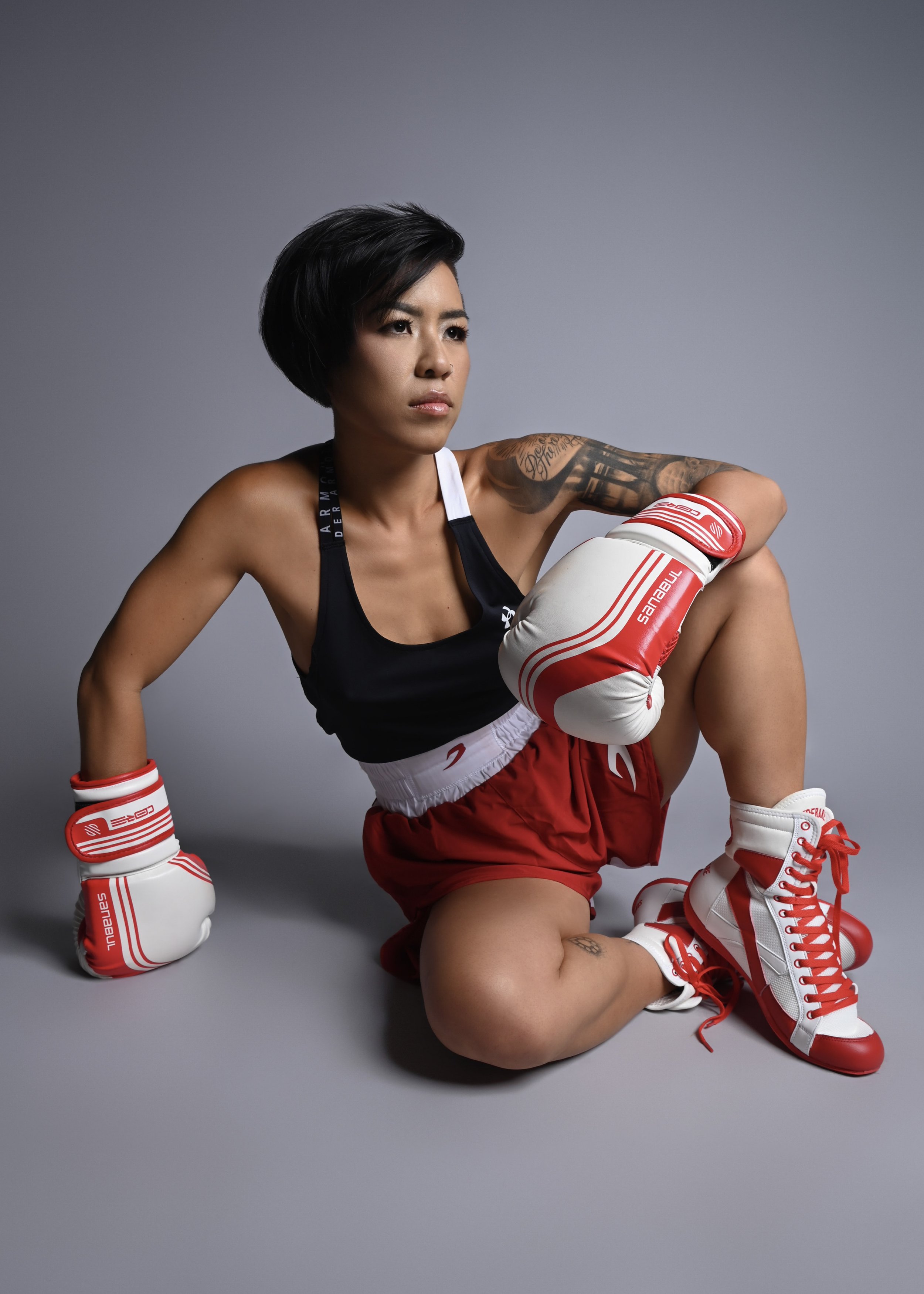
CHECK OUT DINA’s YOUTUBE CHANNEL!
YouTube can be found below.
INSTAGRAM can be found HERE.