
DROP KNEE
“In my opinion, veganism as a lifestyle doesn’t exist. It is a political movement by nature.”
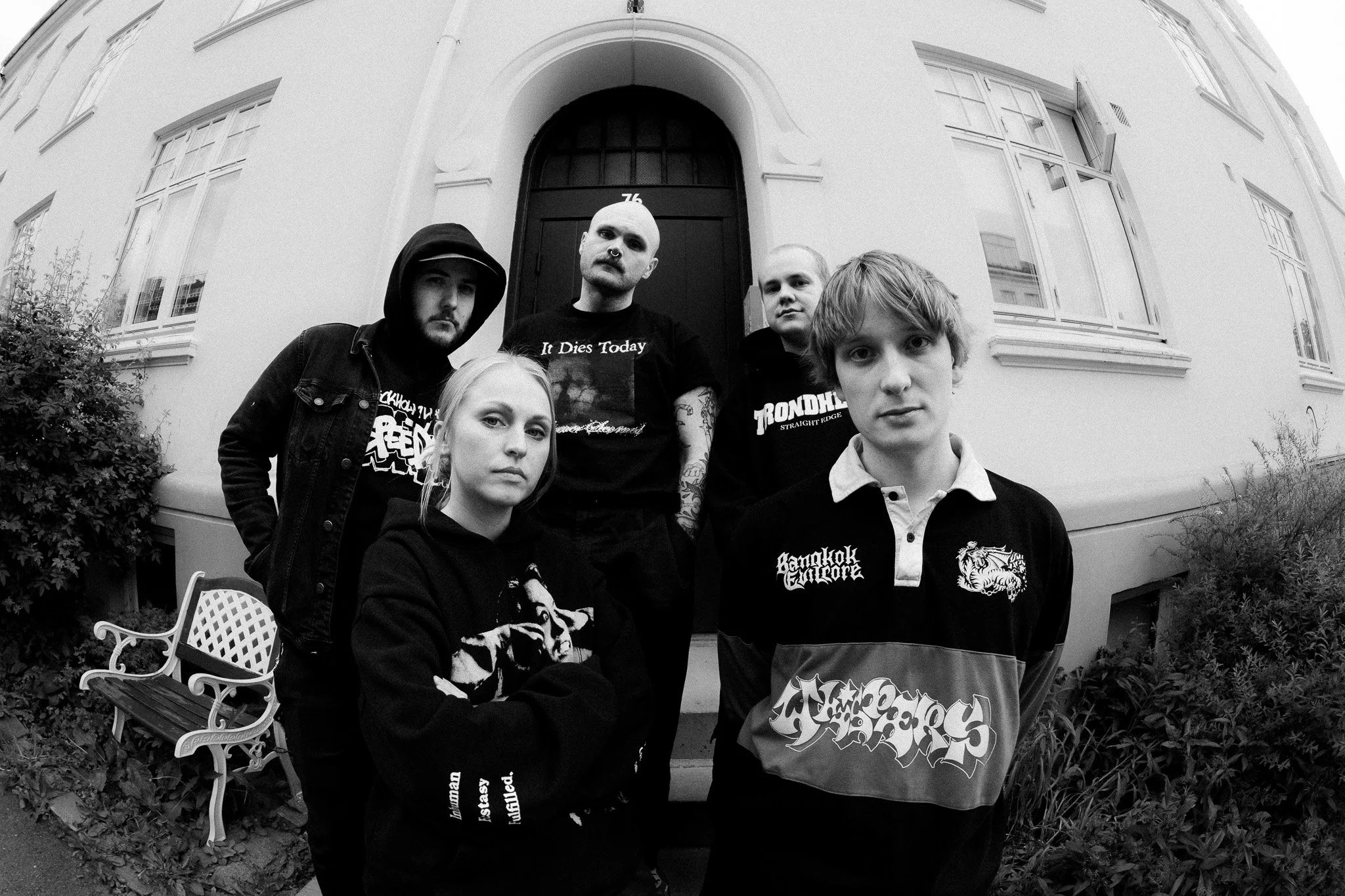
We’re Drop Knee, a vegan hardcore band from Trondheim, Norway. The band consists of Miriam (vocals), Theodor (vocals), Simon (Guitar), Basse (bass) and Johnny (drums).
When does conviction become more than a personal lifestyle choice?
T: When you start seeing your personal choices as more than just factors that affect you.
What do you think gets lost when veganism is marketed as a lifestyle rather than a refusal of exploitation?
M: I’m not so sure I’d even count that as veganism. Veganism to me is an inherently political practice and if you don’t recognize that I’d say you’re more plant based than vegan.
S: In my opinion, veganism as a lifestyle doesn’t exist. It is a political movement by nature.
T: When you’re plant based, you’re reaching a right conclusion but it’s still based in anthropocentrism. The inherent and defining empathy of veganism is lost when you make it a lifestyle first and political position second (if at all). It becomes more about you than the world, when it should be the other way around.
Do you think people sometimes use veganism to feel morally superior without actually challenging the systems behind exploitation?
T: I don’t believe this is something I’ve encountered from vegans, but it is a sense I get from people who are plant based occasionally. It’s for sure possible to shield lack of ethical considerations behind veganism because your base position “contributes enough” to a sense of moral superiority. It’s just not something I’ve come across.
M: Not intentionally, but yeah for sure you do have people who are vegan who probably fail to see the intersection that veganism has with other systems of oppression and exploitation in our society.
What uncomfortable truth about veganism do you think more people need to hear?
T: It’s not hard to go and stay vegan in almost all western countries.
S: I don't believe being vegan is a net positive, I believe consuming animal products and thus engaging in that economy is a net negative.
How do you respond when someone claims to oppose animal suffering but refuses to change their own behavior?
T: They’re lying both to you and themselves. For most people, this lie stems from a deeply seated personal and emotional investment in the comfort that this position provides, and is incredibly difficult to address in a constructive (i.e “change their minds”) manner. Usually I just ask them to explain how it’s possible to care about animals and actively participate in animal suffering.
Is hypocrisy inevitable when trying to live ethically, or should we hold ourselves to a higher standard?
T: I think it is possible to acknowledge the fact that there are very few ways to be and live in the world that are wholly ethically defensible, while still making active and informed choices oriented around “the most” ethical position. Holding yourself to a higher, more informed standard will always be possible, and should be striven towards wherever practical. Veganism is achievable for most people, and is probably the best place to start.
S: Most of our economical systems are built on oppression, if we want to live a modern life we kind of have to engage in it to some degree. Nuance is important here but veganism is an easy moral choice.
Do you think calling out hypocrisy is necessary, or does it ultimately push people away?
M: I think holding yourself and others accountable is generally a good thing, but there is no doubt that being confrontational might push some people away. That’s not to say you shouldn’t do it though. It’s all about finding a balance I suppose.
Can someone genuinely oppose exploitation while still benefiting from systems built on it?
T: As someone living in one of the many countries around the world that are as well off as they are because of exploitation, I genuinely hope so. Being aware of, and counteracting, in whatever ways you can, the exploitative systems that benefit you, are a way of balancing the scales.
Has hardcore become too comfortable with rebellion as an aesthetic rather than a practice?
M: I feel like it depends where in the world you are. I’m not going to pretend I know everything about every hardcore scene around the world, but I do feel like the political backbone does seem to have disappeared from hardcore in some places of the world, however from what I can see, radical politics and rebellion seems to play a stronger role in several places around Europe.
What happens when radical ideas become fashion?
T: As when anything is commercialized and aestheticized, you strip it of its soul. You can’t wear political convictions - you have to walk the walk.
Do you believe veganism has diminished its confrontational nature?
M: It is a large and diverse movement with both very confrontational and very non-confrontational groups and people taking part in it, so it’s hard to say. I think there was a period maybe 10 years back when veganism was becoming “trendy” and the politics and confrontational nature of it was drowning in fad diets and new vegan options at fast food chains etc. However these days the tide has turned and I think those of us who are still vegan are doing it with a conviction and sound ethics to back it up.
Is there still room in hardcore for ideas that genuinely make people uncomfortable?
T: Veganism might be one of those bastions of discomfort that many people in hardcore have yet to address. Being surrounded by people who militantly advocate for veganism creates a sort of complacency by way of proximity that I think causes people to feel more relaxed about taking a position.
What are your thoughts on the potential consequences of animal liberation becoming a consumer trend?
T: Ironically, I think it might make people less critical about what they consume, which in turn can lead to a lack of concern when it comes to what other ways you can reduce harm in your consumer habits.
Is purchasing a vegan product sufficient to challenge the status quo, or can consumerism simply perpetuate the same system in a different guise?
T: Capitalism and the profit motive will always default to exploitation. Purchasing a vegan product is a step in the right direction, but as long as the political systems that justify and perpetuate animal suffering remain unchanged, exploitation can never be eliminated entirely.
Do you think the movement should be more suspicious of corporations adopting vegan messaging?
T: I think everyone should be mindful of the fact that whenever a business branches into vegan products, it is, ninety nine to one, to sell you something, period. That said, exercising your rights as a consumer to choose less cruel options will in most cases lessen (although not eliminate) animal suffering.
What does resistance look like when the system can sell you an image of resistance?
T: Social accountability. The image will always be surface level, but walking the walk is a whole other deal. Talk to your friends about veganism, engage with your community. Challenge the disingenuous positions of fad diets and lifestyles, while giving credit where it is due.
Do you see veganism as the end goal, or as one part of a broader struggle for animal liberation?
M: To me veganism is a tool in order to work towards the abolishment of all systems of oppression. It’s the least one can do if one wants to end the oppression of animals.
Is “animal welfare” enough, or does meaningful change require abolition of animal exploitation?
M: I’m a sound believer in abolition of the entire system of animal exploitation. I’m not against changes that will lessen the pain on the animals being exploited today, however it is crucial to not let these changes create a sense of complacency that takes away from the overall end goal of abolishing the entire industry. I do fear that non-vegans are becoming all too happy with buying free range/grass fed/slow grown meat and thinking that they are doing a good thing for animals
Why do you think society accepts violence against animals that would be unacceptable toward humans?
M: We live in a society that is built on speciesism, it's something that is deeply ingrained in everything we are taught from birth.
What do you think people are most unwilling to confront about where their food comes from?
M: I like to think that most people don’t actually believe that the current animal agriculture system is morally defensible, but to truly confront it would be to either accept that you’re not living in alignment with your beliefs, or to have to make (what is usually perceived to be) a drastic lifestyle change. So of course it would be easier not to do either of those things and avoid thinking about it.
Do you think changing individual behavior is enough without challenging the institutions responsible for exploitation?
M: It’s easy to feel like one is never doing enough in this world. The way I see it, changing my individual behaviour is the least I can do, and I try to convince others to do the same and not shying away from hard conversations and talking about vegan issues when I feel it is the time and place to do so. Starting Drop Knee has been a big part of that.
Is ignorance still an excuse when the information is readily available?
M: I’d say it depends whether one is refusing to learn or simply haven’t been made to think about it yet. The key is really in what one does in the moment when one is confronted with said information. There are probably still things out there that I am ignorant about as well, but I think what’s important is to be open to learning and changing one's behaviour in order to always strive to do better.
What does liberation actually mean to you?
M: Freedom from systems of oppression and exploitation and the right to complete autonomy.
Do you believe activism should make people uncomfortable?
M: I think there should be room for a wide range of activism within any movement. Confrontational tactics may work on some people, whereas others are better off simply being shown by example. Both are useful and have their time and place within the vegan movement.
Have you ever stayed quiet about your beliefs because confrontation felt easier to avoid?
M: Being vegan for 10 years I have absolutely had times where I have not been in the headspace for a debate or discussion, and I think in order for your veganism and activism in general to be sustainable in the long term you have to to some degree learn to pick your battles. If someone ever offers me a non-vegan snack at a work meeting I’m usually going to politely decline instead of striking up a debate about animal exploitation, but should they enquire I will happily let them know the precise reason why I don’t eat animal products.
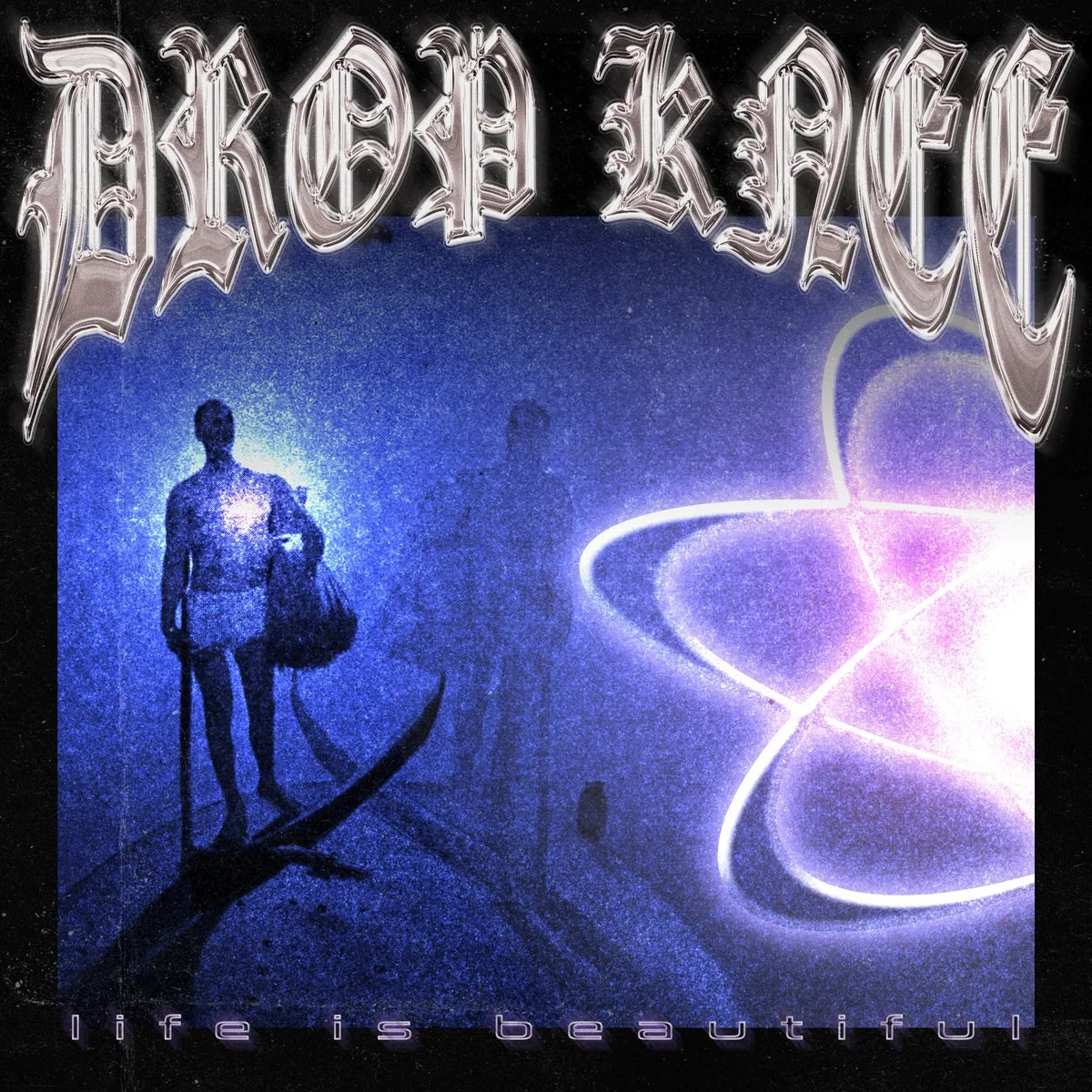
LISTEN TO “LIFE IS BEAUTIFUL” BY DROP KNEE NOW!
Bandcamp can be found below.