
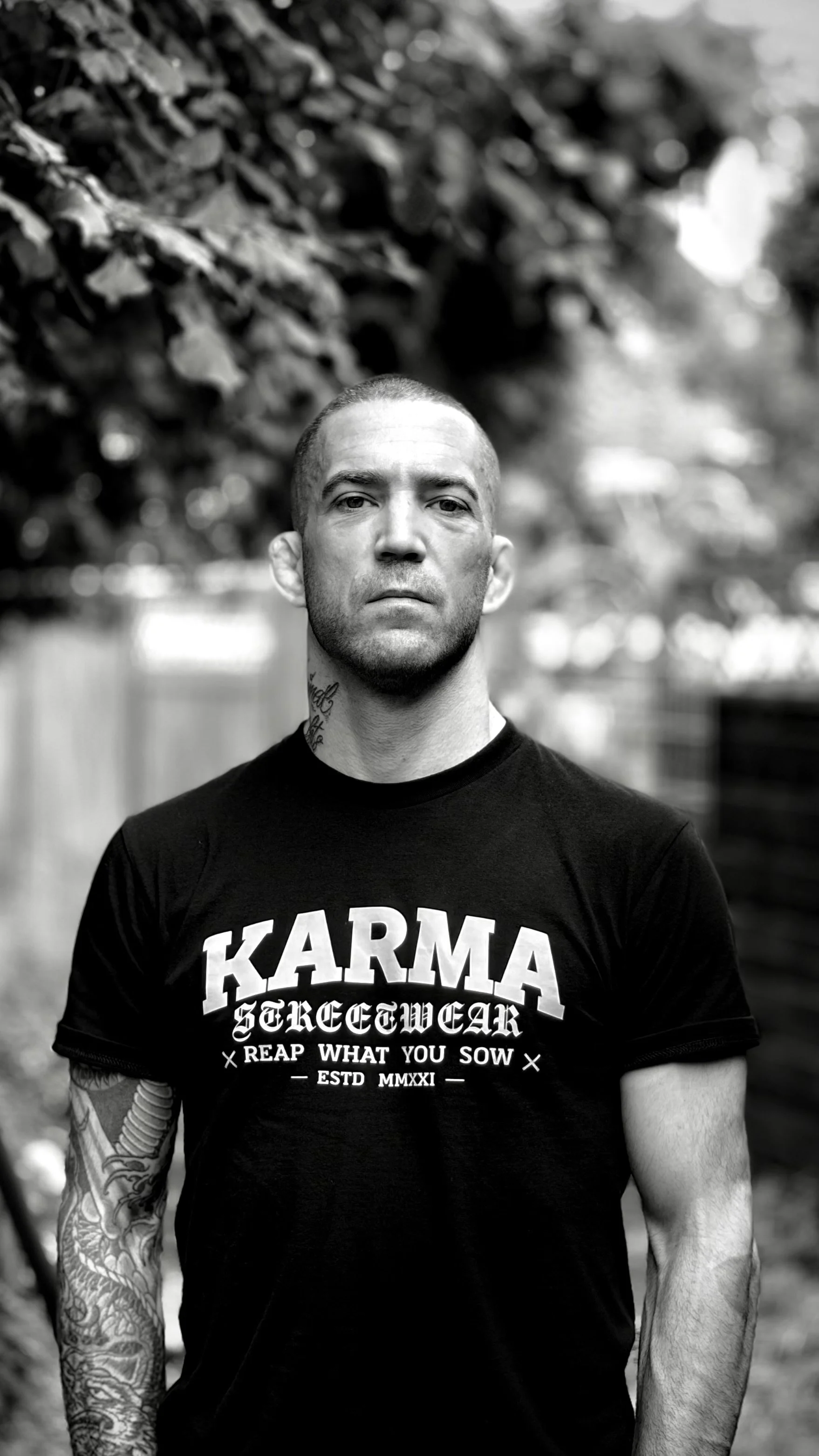
“Becoming vegan immediately became a part of who I am. It was the first time I felt like my actions were truly aligned with my ethical values. I no longer had to make excuses for the things I was doing or try to justify choices that didn’t feel right to me.”
I’m Maximilian Urschl, also known as“The Vegan Grappler”. I have 20 years of martial arts experience and have specialized in grappling (Luta Livre and Brazilian Jiu Jitsu) since 2010. I hold a black belt in each discipline and am an active competitor. I have been vegan since around 2018 and advocate for animal rights in various ways. I am happily married and have a son. My first hardcore show was Sick of It All in 2006.
What was the moment or experience that first pushed you toward veganism?
I was vegetarian for 13 years before I became vegan. At the time, I simply hadn’t looked into the subject deeply enough. I thought that not eating animals was enough — which, of course, I now realize is complete nonsense.
Did your path into veganism come before or after you started training Brazilian jiu-jitsu?
I started Martial Arts in 2005, shortly after becoming a vegetarian. I went vegan in 2018.
How did your friends, family, training partners, or community react when you made that shift?
My wife went vegan with me right away.
What originally drew you to martial arts?
I started training BJJ and Luta Livre because I had previously trained in various stand-up fighting and self-defense disciplines, and I saw a major gap when it came to ground fighting and realistic sparring.
These ground-fighting systems gave me the opportunity to really push myself physically, train with resilient and challenging partners, and actually test whether the techniques and concepts I was learning would work in real sparring.
Was there ever a point where you questioned whether veganism and being a competitive grappler could coexist?
Never. Ever.
When did veganism become more than just a personal dietary decision and become part of your identity?
Becoming vegan immediately became a part of who I am. It was the first time I felt like my actions were truly aligned with my ethical values. I no longer had to make excuses for the things I was doing or try to justify choices that didn’t feel right to me.
Combat sports are often associated with toughness, aggression, and traditional ideas of masculinity. Do you think veganism challenges any of those ideas?
I think one of the most important things I’ve learned is that being vegan doesn’t mean you have to sacrifice strength, physical power, or a strong mindset. You can be vegan, perform at a high level, and push yourself just as hard as anyone else. And I think it’s important for people to actually see that.
How do you respond to the idea that someone needs to consume animal products to be strong, athletic, or competitive?
That’s simply not true, and it has been scientifically disproven. I’m living proof of that myself by the way.Have you ever felt like being vegan made you an outsider within combat sports culture?
No, actually, never. Many of my training partners are genuinely interested in the topic, especially when it comes to animal rights and animal exploitation. Those are conversations I’m always happy to have.
People also ask me about more practical things, like which supplements I take, whether I use vegan supplements, or what kind of protein I use. So there’s always a lot of interest from the people around me.
The hate and negativity tend to be more of an online phenomenon. I rarely experience that in person.
Do you think veganism is still misunderstood within the BJJ and broader combat sports communities?
Yes, unfortunately, I do think so. A lot of people see veganism as simply being plant-based — basically, just eating plants and avoiding animal products. But that’s merely a way of eating; veganism goes much further than that.
Unfortunately, that’s why there are so many so-called “plant-based athletes.” I like to make a distinction there and refer to myself as a “vegan athlete.”
Have your training partners generally been curious and supportive, dismissive, or somewhere in between?
I have quite a few training partners and students who are really supportive of what I do. Some of them have even gone vegan themselves.
Others have started eating more plant-based or have begun replacing many of the animal products they used to consume. For a lot of them, that was simply their first step.
I also know several people who now support animal sanctuaries completely on their own. And for some of them, I was actually the person who helped them understand the connection between animal exploitation, our food choices, and veganism in the first place.
How do you think veganism fits into the values traditionally associated with martial arts (discipline, respect, self-control, and responsibility)?
I think the two actually complement each other really well. Values like discipline, self-control, and making conscious choices are all things that connect veganism and martial arts.
Do you think being a competitive athlete gives you a unique opportunity to challenge stereotypes about veganism?
Yes, absolutely. That’s exactly why I make such a point of calling myself a vegan grappler. I want to show people that being vegan doesn’t hold you back as an athlete. You can compete, train hard, perform at a high level, and test yourself against other athletes — all without animal products.
That’s what I want people to see: you don’t need animal products to be a strong, capable athlete.
Have you ever had a conversation about veganism with a training partner that genuinely changed their perspective?
Yes, actually, quite often. Training partners have asked me about veganism on several occasions. I usually start with the animals and focus the conversation on the issue of animal exploitation across different areas.I don’t usually start with things like health, fitness, or performance, which is often what people are interested in when they first ask me about veganism. Instead, I try to get them to look at it from the animals’ perspective and help them become more aware of what they’re actually experiencing.
In my experience, that approach works really well. Once people understand that, the other benefits of veganism tend to make a lot more sense to them as well.
Is there a difference between telling people that veganism is compatible with strength and actually demonstrating it through your own life?
Absolutely. Especially in sports, I’m a big believer in putting things into practice. Practice beats theory, time and time again.If you actually live by what you preach and can prove through your own performance that it works, that speaks for itself. That’s far more convincing than making empty claims without being able to back it up with anything tangible.
At the end of the day, results speak louder than words.
How important is it to you to lead by example rather than simply argue for veganism?
That’s very important to me, and that’s exactly what I try to do.
Do you think people are more willing to reconsider veganism when they see someone who doesn't fit their stereotype of a vegan?
Yes, I’ve definitely experienced that as well. Quite often, people have been surprised to find out that I’m actually vegan and can still fight and perform at a high level.Especially in my sport, having good endurance and strength are essential, and I’ve noticed that seeing me perform can really make people stop and rethink some of their preconceptions about vegan athletes.
What do you hope people take away when they see "vegan" and "BJJ fighter" associated with the same person?
The most important thing for me is for people to see that you can perform at a high level without exploiting animals — and that we simply don’t need animal products to do so.Do you consider veganism inherently political? Why?
Yes, absolutely. I believe veganism is inherently political because it’s about standing up for the most vulnerable—those who have no voice and no choice. Not out of self-interest, but out of empathy and a sense of justice. It means using our voice and our strength to speak up for those who cannot speak up for themselves.
Do you think choosing not to participate in animal exploitation is enough, or do you feel veganism requires some form of active advocacy?
For me, every form of vegan activism is valuable and valid. I’m grateful for everyone who chooses to advocate for animals in their own way.
Activism can make a difference on a small scale or on a much larger one — just as I try to do through social media and in my everyday life. It’s not about everyone doing it the same way. I think everyone should find the approach that works for them.
The important thing, to me, is that the core message remains clear and that we don’t dilute it.
Do you think vegan athletes have a responsibility to speak up about animal exploitation, or should that remain a personal choice?
I would definitely like to see more vegan athletes speaking up about it. They have a large platform, reach a lot of people, and could use that influence in a meaningful way.
I think it’s a real shame when someone lives vegan or has a strong, positive conviction but doesn’t use the opportunities and reach they have to make a difference.
How have your beliefs about veganism changed since you first made the transition?
They haven‘t. Vegan for the animals. Then, now, and forever.
What keeps you committed when veganism becomes difficult, inconvenient, or isolating?
For me, it was a complete switch. At one point, I fully understood that this was the right path for me, and ever since then, there haven’t really been any questions.
I don’t struggle with it, I don’t have doubts about it, and I don’t have to constantly think about it. It’s simply something that’s firmly rooted in who I am.
It’s like knowing that I’m anti-fascist, anti-racist or that I’m a feminist. I don’t have to question those things every day. They’re simply part of my values and who I am.
Do you think the number of high-level vegan athletes will continue to change people's perceptions of veganism?
Yes, I definitely think so. However, I would really like to see more vegan athletes use their platforms to communicate the right message. And not just promote a plant-based lifestyle, but actually speak about veganism as an ethical movement rooted in animal rights and opposition to animal exploitation.
What advice would you give another athlete who wants to go vegan but is worried about losing strength, performance, or muscle?
I’d simply tell them: just do it. And if you’re not 100% sure yet why you’re doing it, then please watch the documentaries Earthlings and Dominion. I’d also highly recommend Gary Yourofsky’s “The Most Important Speech You Will Ever Hear.”
Once you’re 100% sure that veganism is the right path for you, just go for it. It really is that simple. These days, you can find vegan alternatives for pretty much everything.
Honestly, anyone can do it.
What do you hope your presence as a vegan grappler contributes to both the BJJ community and the animal rights movement?
In the combat sports community, I’d like to show more people that you can perform at a high level as a vegan athlete.
And within the vegan movement, I’m happy to be an example of a successful vegan athlete. Someone who can show that you can compete, perform, and succeed without exploiting animals.
Final Thoughts:
First person or athlete who made you think differently about veganism:
Patrick Baboumian
One misconception about vegan athletes:
They are weak.
If you could put one message in front of every athlete in the world, what would it say?
Animals have no voice in the systems that determine their fate. That's why it's our responsibility to stand against their exploitation and defend their rights. Nobody needs animal products to thrive in sports. I'm living proof.
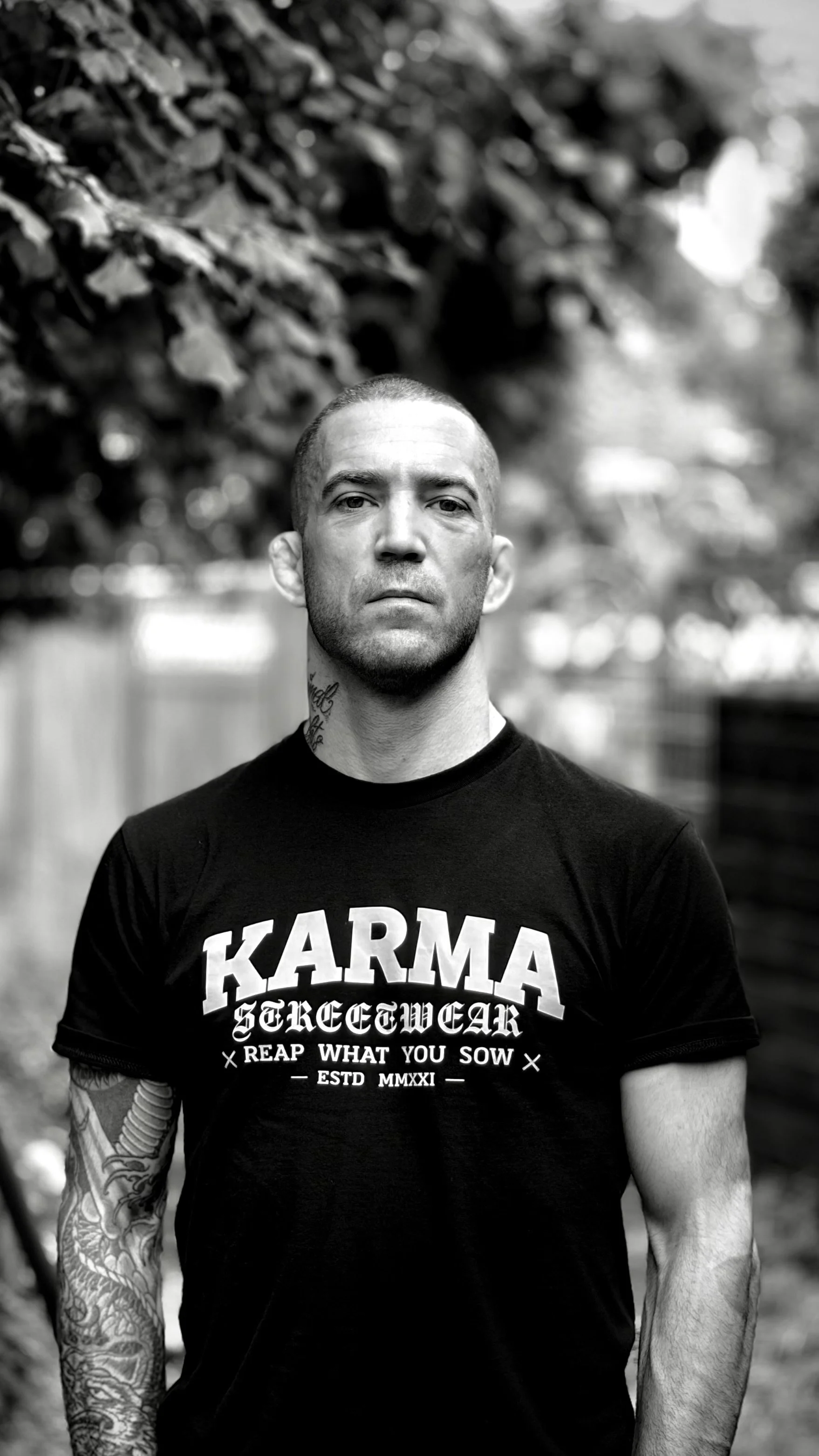
CHECK OUT MAxIMILIAN’S PAGES NOW!
Website can be found below.
INSTAGRAM can be found HERE.