
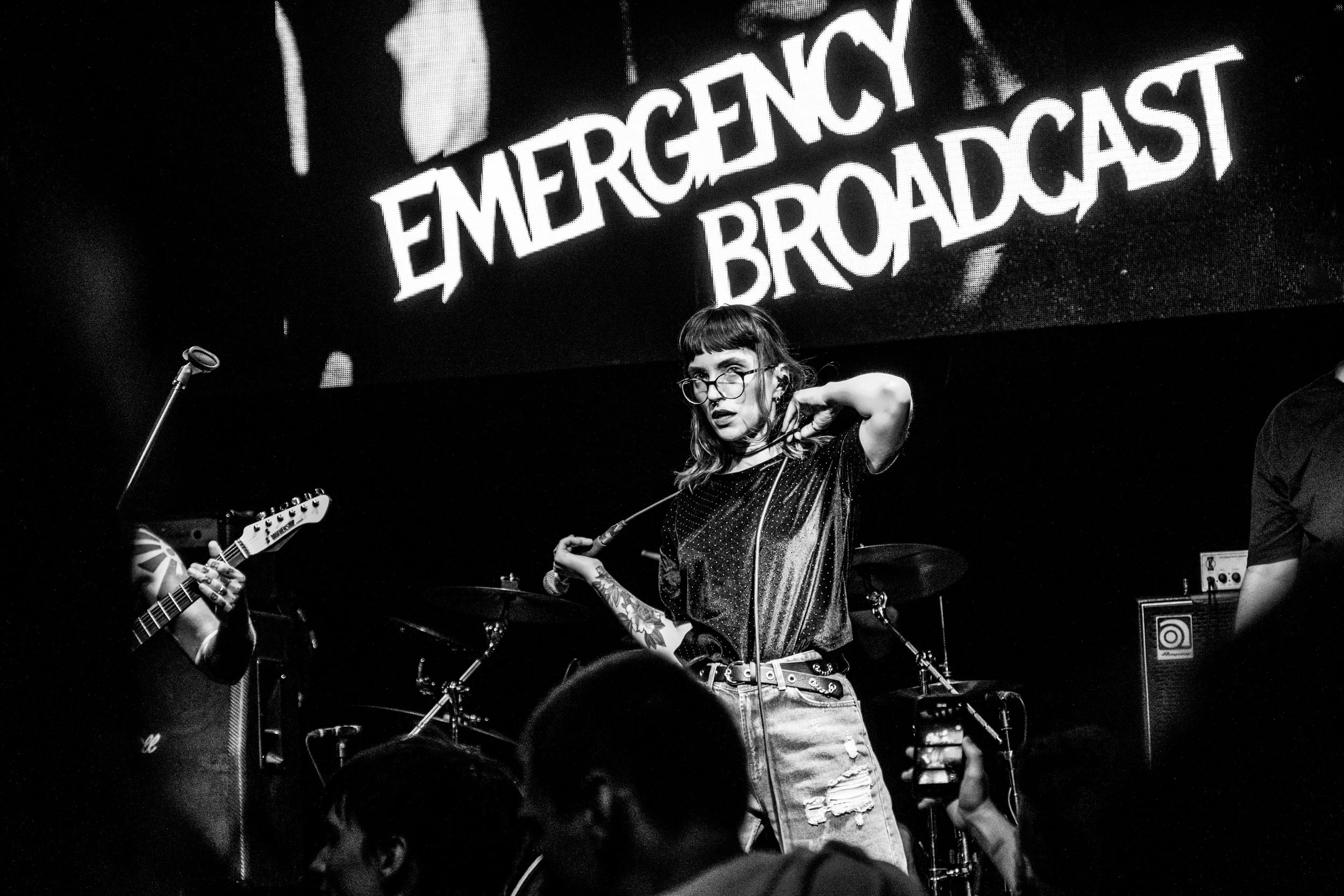
“Veganism liberates animals; straight edge liberates the human mind. So in that sense, they are pretty much connected.”
Vocalist for Emergency Broadcast. Animal liberation activist since 2016.
What was the moment or experience that first pushed you toward veganism?
I met veganism through a colleague, and at first I didn’t really understand the ethical and political side of it. But as I started to dig more, I confronted what animals were going through, and at that moment it was like a lightning bolt for me. I learned about speciesism, human supremacy, and how these are the foundations of many other inequalities and injustices in the world.
Did your path into veganism come before or after getting into hardcore / straight edge?
I came across veganism before hardcore/straight-edge culture.
Was there a specific band, record, or scene influence that opened that door for you?
I was introduced to the vegan straight edge by my husband, who is also our drummer. The first band he introduced me to was Earth Crisis. I was pleasantly surprised that there was also a strong influence in music as well. As I was coming from activism, I always thought that there wouldn’t be much activism outside the mainstream activism circle. So it was eye-opening for me.
How did your friends, family, or local scene react when you made that shift?
When I became vegan in 2016, almost everyone around me was either worried or skeptical. But then as time went by, they started to understand more why I had made that decision. In terms of becoming straight edge, it was less shocking for them, as I did have a bad history of substance use, so they were more than happy.
Was it an immediate commitment, or something you grew into over time?
After using and consuming animals for the first 30 years of my life and consuming myself by using substances for 32 years, I can say that it grew pretty fast on me. Of course, there was a time when I tried to understand what this meant, but I quit everything overnight.
For you, how connected are veganism and straight edge—are they inseparable or distinct choices?
So, I should start by mentioning that everything is political. How you treat others, how you see yourself, how you treat yourself – everything is dictated by a propaganda machine that is harming you and others. So from this perspective, veganism is living a life where you respect the animals, where you see them as someone, not something, and where you object to the mere propaganda that animals are unimportant “things”. Whereas straight edge, for me, is denying the propaganda where substance use is normalized. It’s something that you do to “stay awake". Veganism liberates animals; straight edge liberates the human mind. So in that sense, they are pretty much connected.
Do you see veganism as an extension of straight edge ethics, or its own independent stance?
The idea of veganism and animal liberation might be much older than straight-edge ideology. Although the term was coined in 1945 in the UK, the practice of living a life without causing harm to animals is way older, and it manifests itself in different cultures. So I wouldn’t say it’s an extension; I’d say they became connected through the rise of awakening.
How do you respond to people in the scene who embrace one but not the other?
People might come from different backgrounds with different motivations. For some, I can see it as a personal choice. For example, I met people who were heavy drinkers and were experiencing serious problems, so they became straight-edge to overcome this. So they might not be aware that this is also a political issue where you need to consider everything that makes you do stuff that causes unnecessary harm to you and to others while serving big corporations to make more money. So, I guess it would be nice to show these people the political side of the ideology, too.
What role did the hardcore/metal scene play in shaping your beliefs?
I should say that vegan straight-edge bands definitely had an influence on me, especially in becoming a hardcore vocalist. Also, metal music in general had a great influence on me personally since I was a teenager, especially to overcome mental issues and problems where I did have very little to fight with.
Do you feel like the scene today is more or less aligned with vegan values than when you started?
I can see that there are more bands nowadays, but the tricky part is how many of them can survive in the long term. So I think that we need more solidarity and more true DIY culture to make it last.
What kind of impact do you hope your band has on listeners?
First of all, I hope to influence women and queer people to form a band or to be a part of a band, as well as to write and produce music. I used to be a listener as well, so anyone can switch sides, and I believe there are many talented fem-queer people out there who we need in the scene. Besides that, I obviously hope to have an influence with the music and the lyrics that we write. All of our songs are about a struggle, whether of animals, nature or humans. So I hope these stories and voices are getting heard.
Have you ever heard from someone who changed because of your music?
That’s something that I’m also very curious to know!
Do you think music can genuinely shift people’s behavior, or just reinforce existing beliefs?
I think music has the power to do this. But making music alone may not be enough. You should build a story around your music and your band where the audience can dive in. In that sense, I still think the image part, like videos or artwork, is still crucial alongside the music because they reinforce the meaning of the songs and it makes it more visible in a world where we have a lot to digest.
Do you see veganism as inherently political?
Of course. I think it’s the core of our politics. Animal exploitation is one of the oldest forms of exploitative systems and inequalities. All the systems are adapted from animal exploitation. It’s not just food politics; it’s a whole damn system that modern human life operates on. Not only ideologically but in practice as well. When you think of the influence of slaughterhouses on modern production systems, for example. Humans literally learnt a lot from exploiting animals, in a negative way.
How do you balance music with direct action or activism, if at all?
Music became a remedy for my activism, too. Animal activism can be very traumatizing and tiring, so whenever I feel down or burnt out, I turn to music, and I try to produce something, which is also a form of activism. In that sense, it’s balancing itself.
What issues within the broader movement do you think aren’t being talked about enough?
Well, I see that some people still see issues as single matters. They can’t or don’t make the connections. They isolate some issues or may be discriminatory against some people. I think this needs to be changed and the activism realm should be more intersectional and inclusive.
Looking back, would you approach your message differently?
In the beginning of my activism journey, there were times when I was more angry and reactive. I guess I'd like to change that.
What keeps you committed when it gets difficult or isolating?
When you know what animals are going through every single minute, I don’t think we have a choice to do otherwise. When it gets difficult, I try to take some breaks and try to do something; even a very small thing helps me keep going. Because the worst thing is just watching, witnessing, knowing and doing nothing. Action makes me feel more hopeful and keeps me going.
Where do you see the vegan / straight edge movement going in the next decade?
There is a lot of counter-propaganda as well. But even so, I see that many people are sick of the current system. They are sick of how they feel, live and act in this system. So, I think this feeling of discomfort will keep leading people towards a vegan straight-edge lifestyle.
What would you say to someone on the fence about embracing these ideas?
Don’t think of it as a perfectionist idea. Think of it as something that you come across. Try to understand it. Start doing it. Leave the old behaviors that you are not happy with. Everything will sit in its place after some time. And you’ll feel happier and more wholesome.
Final Thoughts:
First band that made you think differently:
Earth Crisis.
A lyric you’ve written (or heard) that still hits hardest:
From our song “Drowning Dog” which is written for the stray dogs of Türkiye who have been killed since 2024 and also for all the animals. It’s about making the connection and starting to fight for the cause:
“Behind a thick, blurry glass
I can now see you with my soul
Crying for justice
Living for revenge
Resisting together until the end.”
One misconception about vegan / vegan straight edge:
That we live a boring life :) You don’t need substances to have fun or to eat animals to get satisfied. It actually makes you feel worse and worse over time. You can eat everything plant-based, and you can have fun without consuming any harmful substance. These are unhealthy coping mechanisms and can be replaced with healthy and ethical ones.
One non-negotiable value:
It's not something that you can switch off and on. And it shouldn’t be something you do for looks or to fit in.
One thing the scene needs to do better:
Practice the values and extend them to the scene itself. For instance, being XVX is great, but if you exploit people, if you mistreat them, if you gatekeep, it doesn’t align with the political stance of the ideology. Living an ethical life should manifest itself in every aspect of our lives.
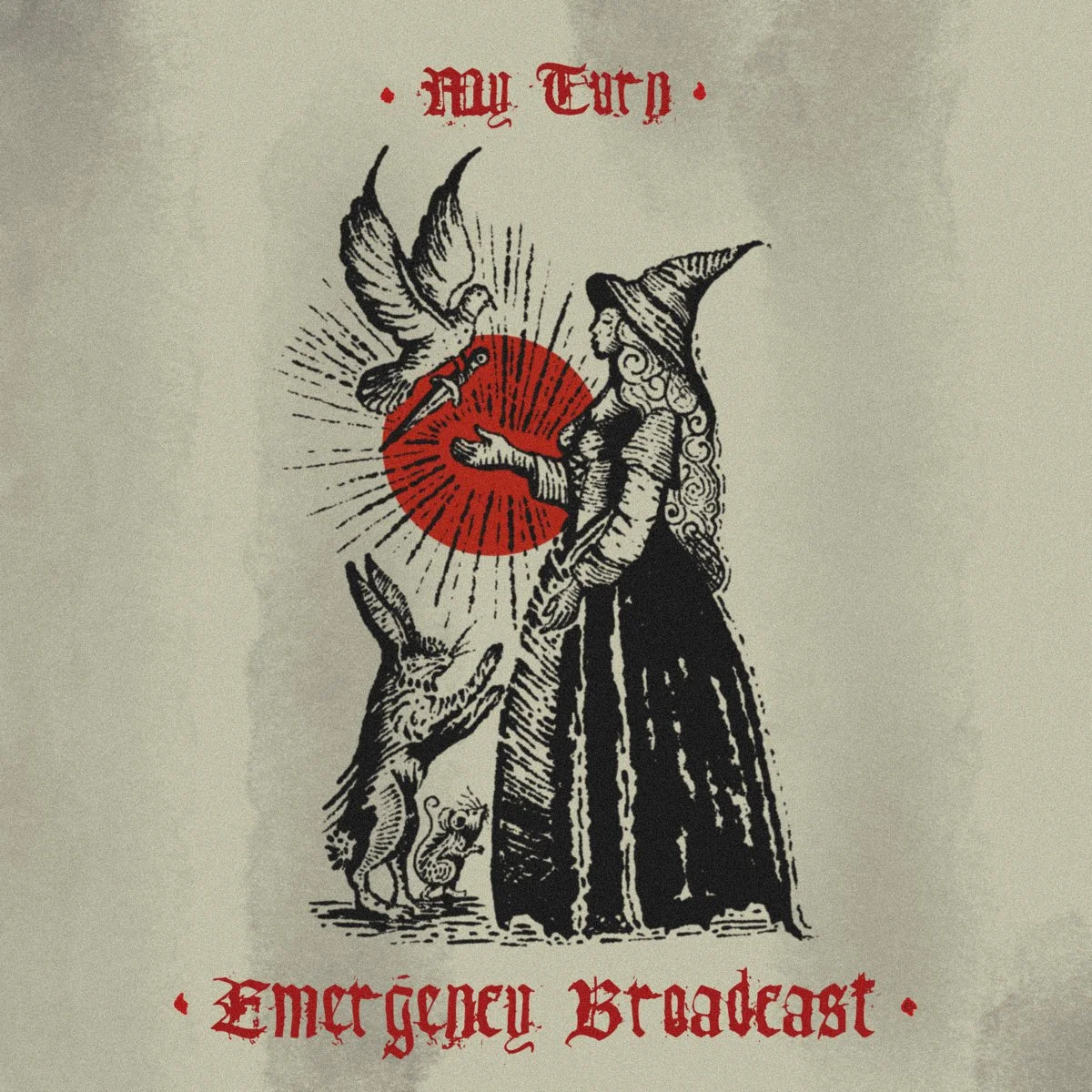
STREAM EMERGENCY BROADCAST’S NEW SINGLE “MY TURN” NOW!
Bandcamp can be found below.