
EVA HALL

“For me, veganism was the beginning of me really questioning everything what was once accepted as normal. I think for a lot of people, veganism probably is a trend and it doesn’t lead to bigger changes in the way they think or act, and they probably will move on the another trend soon. But for some of us, it’s the start of trying to live a more compassionate life and create a world where everyone is free to live without being exploited for another’s gain.”
I’m from California. I was in a vegan straight edge band called Gather. I’m currently in a band with several of the same members of Gather, called Power Alone, and I’m also in a band called No Plan. I like to read and draw and go to the beach with my dog, Bell.
When does conviction become more than a personal lifestyle choice?
What do you think gets lost when veganism is marketed as a lifestyle rather than a refusal of exploitation?
Do you think people sometimes use veganism to feel morally superior without actually challenging the systems behind exploitation?
What uncomfortable truth about veganism do you think more people need to hear?
Great, this topic is going to get me all angry right off the bat, haha. One of the most frustrating things about a lot of animal rights people is exactly this “lifestyle versus refusal of exploitation” issue. I’ve seen it when they make excuses for sexual predators in the scene, and I’ve seen it when they support Zionism and deny an active genocide. They become so focused on a single issue rather than the principle of fighting against dominance, oppression and exploitation where ever it exists. That’s also when it starts to feel cult-like: they will justify awful things men do just because they’re animal rights activists. They can see blatant misogyny and patriarchy affecting women in the community, but continue to enable it because they aren’t trying to end ALL forms of domination, just speciesism, apparently. I know Zionist vegans. If you’re against the slaughter of innocent animals, but not also against the mass murder of an entire population of indigenous people, why is that? The only conclusion one can come to is that they’re deeply racist, and I have nothing in common with “vegans” who are that single-issued. This is why I’ve always been about “total liberation”, which includes animal, earth, AND human liberation.
How do you respond when someone claims to oppose animal suffering but refuses to change their own behavior?
Is hypocrisy inevitable when trying to live ethically, or should we hold ourselves to a higher standard?
Do you think calling out hypocrisy is necessary, or does it ultimately push people away?
Can someone genuinely oppose exploitation while still benefiting from systems built on it?
What contradiction within the vegan movement bothers you the most?
I feel like this has really divided the community, and rightfully so. I’ve seen (and experienced) too many instances of men claiming to have these righteous ideals, but who abuse others, and people just look the other way, or make excuses and defend them, or even worse, blame the victims. I want nothing to do with people who are that far-gone and identify with abusers more than their victims. Of course it’s impossible to live 100% ethically in a capitalist world, or in any world I guess, and we’re all trying to do the best we can. But it’s not a big ask to NOT rape people, or to NOT be verbally/emotionally/sexually abusive and refuse to change. That does need to be called out and people need to stop living in denial and pretending that someone who is vegan is incapable of causing harm like that. It’s not “calling it out” that is pushing people away; it’s creating a culture where victims of abuse are not believed or supported that is pushing people away. Creating a cult-like environment where people are in denial or refuse to address reality is pushing people away. Without getting too specific, I sure as hell am not going to put up with that anymore. I did for a long time.
Has hardcore become too comfortable with rebellion as an aesthetic rather than a practice?
What happens when radical ideas become fashion?
Do you believe vegan straight edge has diminished its confrontational nature?
Why do you think some people embrace the imagery and identity of resistance without embracing its ethics?
Is there still room in hardcore for ideas that genuinely make people uncomfortable?
Do you think the scene has become better at talking about ethics or just better at branding them?
It’s funny because in a lot of ways, I feel like the hardcore scene in general has come a long way and made a lot of progress as far as being more critical of things like white supremacy and patriarchy. But in the vegan hardcore scene specifically, it feels like there has been less emphasis on environmentalism and criticism of capitalism than there used to be. It’s like people used to boycott the fast food industry for its impacts on the environment and workers, as well as animal murder; vegans would protest McDonalds or Burger King (I remember so many “McMurder” and “Murder King” stickers back in the day haha.) But once a corporation introduces a vegan option or something, they’re fully in support. Same with certain brands that are well-known for exploiting workers in sweat shops: if you still boycott certain brands for these reasons, it’s like you’re a killjoy. I don’t judge people who eat fast food or buy these brands necessarily (I probably support a lot of shitty companies, too), it’s more just being surprised at how priorities have changed and it doesn’t seem like people have issues with these mega-corporations anymore. There’s also the fact that with the intense surveillance state we’re living in, and the more extreme punishments for direct action, the movement has for sure taken a huge hit and I can’t blame individuals for that. Or maybe people have realized that NOTHING is going to stop the destruction of the planet at this point—definitely not a boycott— so I guess I can’t blame people for this sense of despair and hopelessness. I also struggle with it constantly.
Can veganism remain radical once corporations realize they can profit from it?
What are your thoughts on the potential consequences of animal liberation becoming a consumer trend?
Is purchasing a vegan product sufficient to challenge the status quo, or can consumerism simply perpetuate the same system in a different guise?
How do you distinguish between supporting vegan businesses and engaging in activism that is commodified?
Do you think the movement should be more suspicious of corporations adopting vegan messaging?
What does resistance look like when the system can sell you an image of resistance?
Short answer, “no, it is not radical once corporations co-opt it” haha. Long answer: veganism can be the start of a radical shift in how one interacts with others and the world. For me, veganism was the beginning of me really questioning everything what was once accepted as normal. I think for a lot of people, veganism probably is a trend and it doesn’t lead to bigger changes in the way they think or act, and they probably will move on the another trend soon. But for some of us, it’s the start of trying to live a more compassionate life and create a world where everyone is free to live without being exploited for another’s gain. This means questioning sexism, racism, classism, industrial civilization in general!
As far as supporting vegan businesses as you’ve mentioned: I think the good part of that is simply supporting community. I have friends who have started vegan businesses, because we all have to exist in this capitalist nightmare, but they had a certain passion and wanted to create a place where people with similar ideals could go, and I love that they have helped create community in that way. If they have the motivation and drive to do that, I do think it’s better to support those people rather than corporations that have zero ideals whatsoever. Obviously, community outside of capitalism is even better (get involved with mutual aid, etc) but it’s nearly impossible to exist that way all the time. Shout out to Rascal's in Santa Barbara and Timeless in Oakland, some of my favorite vegan businesses, owned by vegan straight edge hardcore kids!
Do you see veganism as the end goal, or as one part of a broader struggle for animal liberation?
Is “animal welfare” enough, or does meaningful change require abolition of animal exploitation?
Why do you think society accepts violence against animals that would be unacceptable toward humans?
What do you think people are most unwilling to confront about where their food comes from?
Should animal suffering be made uncomfortable to look at if comfort is part of what allows exploitation to continue?
Do you think changing individual behavior is enough without challenging the institutions responsible for exploitation?
Is ignorance still an excuse when the information is readily available?
What does liberation actually mean to you?
You know, after watching a live-streamed genocide unfold in Gaza over these past 3 years, I’ve started to doubt that society will tolerate violence toward animals more than toward people. I’ve come to realize that people will even excuse the slaughter of those who have been completely dehumanized the same way they’ll excuse the slaughter of animals. If it means having to challenge the lies they’ve been fed, they simply go into denial and justify horrific things. There are vegan Zionists as I mentioned. Make it make sense! In my old band Gather, one of my lyrics was: “If there were another human holocaust, we’d be preparing for battle undoubtedly”, meaning, if we saw people people killed in masses like animals are, we’d surely rise up and do something. But I guess that’s not true. We ARE seeing another genocide, in real time, and very few vegans are speaking up at all. It’s disappointing and heartbreaking. It’s like they’re refusing to face the atrocities or have uncomfortable conversations, even when innocent people are being murdered for imperialist greed. Some people see the modern slavery of some humans, or mass murder of some humans as “necessary evils” because they can’t imagine any other way to live that doesn’t require imperialism. This is part of systemic racism. Similarly, some people see the slaughter of animals as a “necessary evil”, too.Maybe it’s still true that once people see the truth, they will come around, whether that’s about animal exploitation or other issues. But it’s been disheartening to see that the same people who have faced hard truths about animal exploitation refuse to face hard truths about the costs of modern imperialism and colonialism.
Do you believe activism should make people uncomfortable?
Is there such a thing as being too confrontational when animals are the ones paying the price?
Do you think protecting someone’s feelings can sometimes come at the expense of telling the truth?
What do you think people are most defensive about when confronted with veganism?
Have you ever stayed quiet about your beliefs because confrontation felt easier to avoid?
I believe in supporting a variety of tactics and not shaming people for being too radical OR too safe. I think liberation requires different approaches in different situations, and we should support all of it: those who fight within the system, and those who fight against the system. What works in some situations won’t work in others; how you approach some people won’t work with other people, etc. So yeah, sometimes it’s more effective to lead by example rather than making people feel like shit if you think someone is genuinely a good person who might come around eventually. It really should be a case by case basis, and everyone has their strengths. Ultimately, people should ask themselves what they can offer, or what skills they have that they can use to advocate/act for liberation and do it.
If “vegan straight edge” disappeared tomorrow, what ideas would still be worth carrying forward?
What do you think the movement should be remembered for?
What would you want someone discovering vegan straight edge twenty years from now to understand?
What are you willing to sacrifice for your principles?
What would make you walk away from a scene, community, or movement you once believed in?
At the end of the day, what are you actually fighting for?
If nobody thanked you, recognized you, or remembered you, would you still do it?
When I first got into punk and hardcore, I lived in a very small town where there was no scene. So becoming straight edge and vegan definitely was a choice I made because it resonated with me, not because I was part of any community with those ideals at the time. So if it disappeared tomorrow, it would kind of be like when I first got into it: just me living in a way that makes sense to me. I’ve also learned the hard way that just because someone is vegan and straight edge does not mean they’re “my people.” While I still would like to believe that those ideals create a special bond with others who share them, I’m often wary of other vegan straight edge people because I now know that they can be fucking racist or sexist and just shitty in so many other ways haha. I used to think I had to make friendships work with very toxic people simply because they were also vegan straight edge, and it was exhausting and sometimes traumatizing.
If someone was discovering it for the first time 20 years from now, I would hope they’d have a more intersectional approach. When I was first exposed to veganism, it was from anarcho-punk bands, and so to me, anarchism was an integral part of punk and hardcore. But a lot of people get into hardcore or straight edge from completely mainstream ways (like wrestling or celebrities or whatever haha) so those anarchist ideals never played a part in their introduction to this subculture. Why would they care about things like feminism?? In an ideal world, vegan straight edge would be rooted in the ideals of total liberation, and inseparable from the desire to end oppression for all, and that would mean the destruction of our inherently oppressive society as we know it today.
Last Words:
Something you wish someone had told you when you first went vegan:
Something the scene needs to be held accountable for:
What part of the scene makes you embarrassed to be associated with it?
A form of exploitation people don't talk about enough:
One thing that still gives you hope:
We are living in terrifying times. But one thing I’ve learned is that things CAN always get worse. So that’s why I feel like it’s still important to not give up, even despite intense despair. Yes, we cannot reverse the devastating damage being done to our planet, but we can fight for a less horrific world, and I guess that’s worth something. If you truly love animals, if you truly love the forests and the oceans and the freedom of indigenous people, we cannot give up resisting their destruction. Destroy capitalism, destroy patriarchy, destroy the industries that commodify this planet.
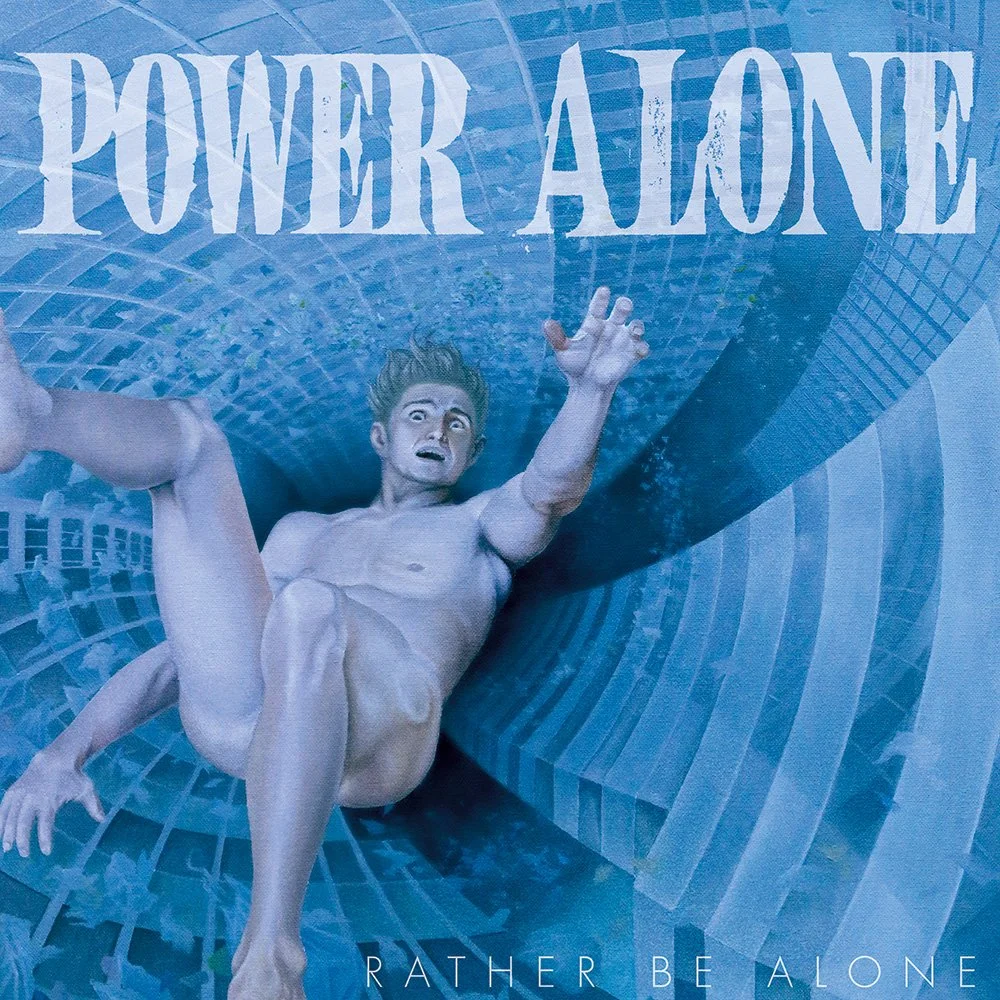
LISTEN TO “RATHER BE ALONE”
BY POWER ALONE OUT NOW ON INDECISION RECORDS!
Merch can be found below.