
SKIVES
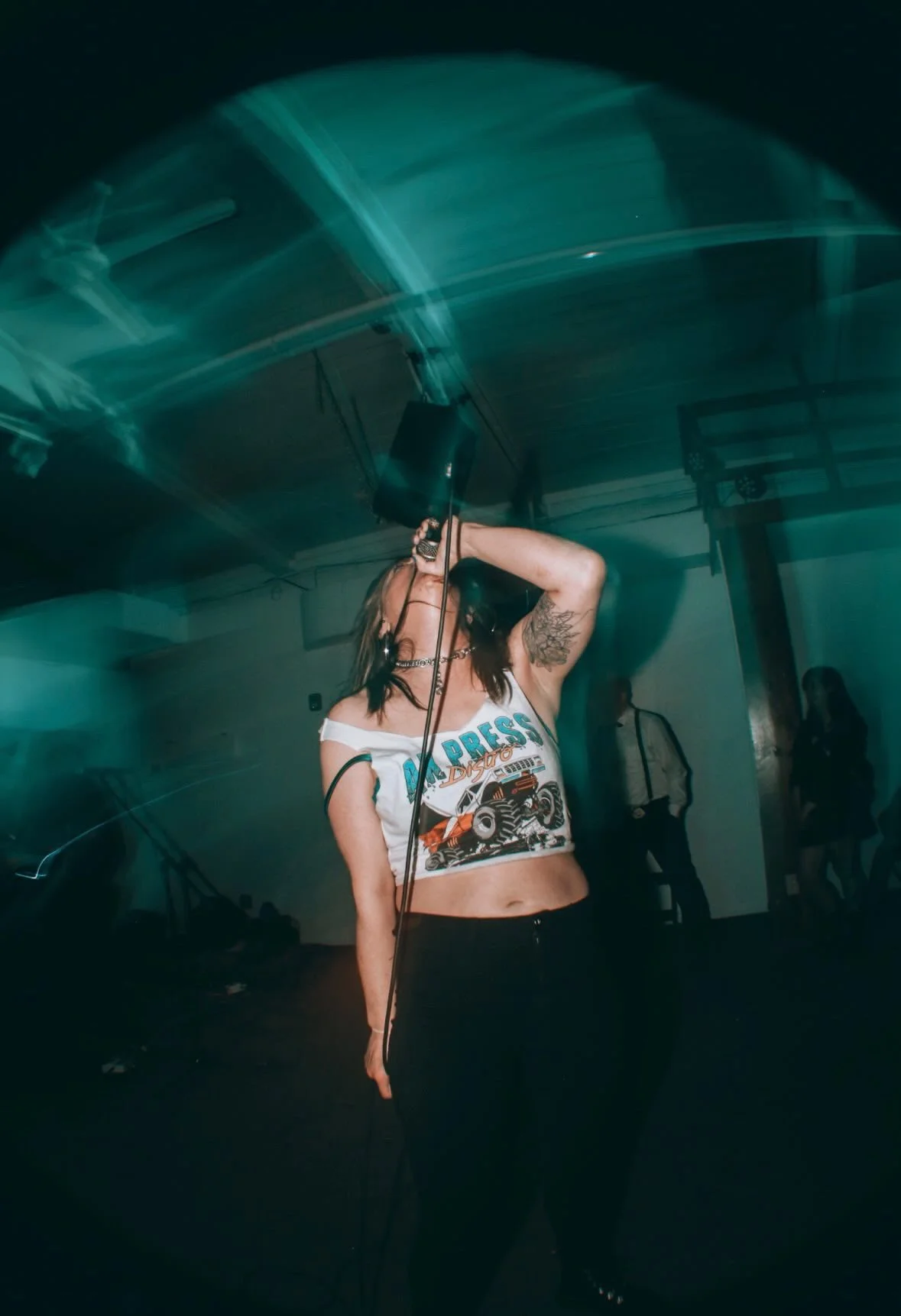
“We’ve always been about speaking up against injustices, calling out capitalism and white supremacy. It’s a call to action, a reminder we all have the power within us to make a difference.“
“I believe that If we want to dismantle hierarchies and exploitation then we must realizes that anti speciesism is needed to make the connection between the oppression of humans and non humans.” — Jamie
What was the moment or experience that first pushed you toward veganism?
Jamie: Earthlings, I couldn’t get very far into that documentary, that made me realize if I couldn’t watch it I couldn’t continue to support such a horrible industry. I also watched Cowspiracy and that documentary really helped me digest what was happening to animals and our environment.
Eric: I had been on the fence with fully committing when I was younger, a friend and I made a pact that he would stay sober and I would commit to giving up animal products.
Doug: I had been vegetarian for about three and a half years and always went out of my way to be as cruelty free as possible whether it was being mindful of the food I consumed, the products I bought or the companies that I supported. In 2016 after viewing Cowspiracy one night I realized that despite my efforts there was still so much I could do to achieve the kind of lifestyle that would benefit myself, the environment, and most importantly the animals. I decided enough was enough and decided to go vegan and never looked back.
Brian: My path to veganism started with 2 friends of mine that were already vegan. I wasn't educated on the idea of animal rights and never truly understood their reason for living a vegan lifestyle. They would drop small tidbits about standard practices in animal agriculture, which planted the seed and led me to do my own research. I was quickly confronted with the reality that I could no longer ignore, and made the decision to go vegan immediately. In my opinion, veganism should the moral baseline and the bare minimum we owe sentient beings on this planet.
Did your path into veganism come before or after getting into hardcore / straight edge?
Jamie: After hardcore.
Eric: Vegetarian before hardcore vegan after. Straight edge before hardcore.Brian: After hardcore.
Doug: After hardcore.
Was there a specific band, record, or scene influence that opened that door for you?
Jamie: Contend’s album “In Contempt”.
How did your friends, family, or local scene react when you made that shift?
Jamie: When I went vegan I felt like I received a lot of support from my family, friends and the local scene. Sure there are people that say “but bacon” and ask if I eat grass, but over all it was positive.
I also struggled with addiction in my youth, as I got older I used alcohol and weed to stay away from the harder stuff. It wasn’t until recently I was able to stay completely sober. I would never judge someone who uses drugs and alcohol. I’m happy to say that on July 11th I’ll have one year sober.
The response I received on going sober in the scene is something I never expected and something I don’t take for granted. Thank you to every person that has encouraged me, told me their story or told me to keep going.
Was it an immediate commitment, or something you grew into over time?
Jamie: Going vegan happened pretty quickly because I was battling with eating animals and animal products long before I fully understood what veganism was. Once I understood it and saw there was a movement of people refusing to accept animal exploitation I knew I wanted to be vegan too.
For you, how connected are veganism and straight edge—are they inseparable or distinct choices?
Eric: I believe that they are not inseparable and that they go hand in hand together, to be able to fully fight oppressive systems you need to have a clear mind, sentient beings need us to fight for them. I refuse to be a living grave for something that just wants to live.
Do you see veganism as an extension of straight edge ethics, or its own independent stance?
Eric: Absolutely, to go against the grain and abstain from drugs and alcohol is breaking social norms, therefore being vegan only makes sense if you’re SXE.
How do you respond to people in the scene who embrace one but not the other?
Eric: Being straight edge is not enough in my opinion, being vegan straight edge is the only true way to fight against the constraints of society and doing what’s right.
What role did the hardcore/metal scene play in shaping your beliefs?
Jamie: Punk rock shaped my beliefs and taught me to question everything. When hardcore and metal came into the picture I was lucky to make so many friends that shared the same values I have.
Do you feel like the scene today is more or less aligned with vegan values than when you started?
Eric: The 20+ years I’ve been involved I feel it’s more aligned now than when I first started coming to shows/events.
What kind of impact do you hope your band has on listeners?
Chip: I hope our music helps people realize they can have a part in making a difference. Just because we're on the platform of playing a show doesn't mean your voice can't be heard just as loud. Please check out the materials we bring to our shows and let us know about other organizations and programs that we can help support.
Have you ever heard from someone who changed because of your music?
Jamie: We definitely have had people say our music has impacted them in some way. People have also come up to us and ask questions about going vegan. Aside from writing music we always make sure to have zines, pamphlets, and literature at our merch table.
Do you think music can genuinely shift people’s behavior, or just reinforce existing beliefs?
Jamie: I personally think it can shift people’s behavior. For me music has always influenced me. It taught me to care about people, animals, the environment and to think for myself.
Do you see veganism as inherently political?
Jamie: I believe most things are political from the food we eat to the clothing we wear along with animal/human rights, racism, housing, climate change, body autonomy, trans rights, the list goes on and on. Therefore I think veganism is political.
That being said I don’t think every vegan is vegan for political reasons so my answer is that it can be.
How do you balance music with direct action or activism, if at all?
Jamie: Direct action and activism is important to me. It’s all about balancing things so burnout doesn’t happen. Currently my activism is being in a band with my friends, writing music, participating in benefit shows and attending protests.
I also have done The Cube Of Truth, volunteered at sanctuaries, and was on the board of Animal Defenders where I helped organized a free vegan food distribution and an after school program that focused on educating students on veganism, animal exploitation, factory farming and the environment.
What issues within the broader movement do you think aren’t being talked about enough?
Jamie: The interwovenness between animal exploitation, human exploitation and land exploitation.
The genocide and colonization happening in Palestine and West Asia along with countless other parts of the world.
Looking back, would you approach your message differently?
Jamie: I wouldn’t. SKIVES has always been about speaking up against injustices, calling out capitalism and white supremacy. It’s a call to action, a reminder we all have the power within us to make a difference.
What keeps you committed when it gets difficult or isolating?
Jamie: Punk shaped who I am. It’s a way of acting and thinking differently. Growing up I always felt like I didn’t fit in. Punk and the hardcore scene welcomed me. It was the reason for me to keep going when it felt difficult or isolating.
Where do you see the vegan / straight edge movement going in the next decade?
Eric: I’m hopeful that more people will embrace abstaining from drugs and alcohol and will realize that the oppression of animals needs to end, it’s needed for a better world and future.
What would you say to someone on the fence about embracing these ideas?
Jamie: Educate yourself, do research and give yourself time. Everyone’s journey into veganism is different and it’s not about being perfect but about doing the least amount of harm that you can.
That can mean sometimes it looks different from person to person based on their circumstances. Being vegan to me is about being compassionate not about being self righteous.
Final Thoughts:
First band that made you think differently:
Chip/Jamie: Dead Kennedys
Eric: Strike AnywhereBrian/Doug: Rage Against the Machine
A lyric you’ve written (or heard) that still hits hardest:
Jamie:
“Always think before you consume, you can make a difference.” -CLEARxCUT-
One misconception about vegan straight edge:
Eric: That we’re stuck up and have no fun.
One non-negotiable value:
Eric: There’s no room for oppression of any kind, total liberation.
Doug: Kindness
One thing the scene needs to do better:
Brian: We need to be better about calling out predators, abusers, racists, homophobes, misogynists, etc in the scene. There should be zero tolerance for any of that behavior. We should strive to be a safe space for anyone regardless of gender identity, sexual orientation, and race. We've made a lot of strides in the last decade but there is still work to do.
Doug: I wish that there was more of a scene in general. Granted it has gotten a lot better. Right before the pandemic it started really dipping in the number of bands and shows or even interest in music. Thankfully after about two years of isolation it seems that everyone missed it and now there’s a lot more bands and people attending shows.
Unfortunately there doesn’t seem to be a lot of venues, which is no one’s fault, but it certainly contributes to the lack of shows. The shows come in waves. We used to be spoiled where bands used to travel to the Lehigh Valley often as it’s a sweet spot between Philly and NYC, plus there would be a show every day of the weekend, sometimes at the same venue, and every show would be very different. Mixed bills even. Friday you could see a hardcore band play with an emo band, Saturday you could see a grindcore band from Japan play with a sludge band, and Sunday could have been an indie band playing with a death metal band. In addition to that it would be the same crowd at every show despite what genre it would be. Unfortunately bands don’t seem to stop by too too much these days. Still thankful for the people who try to make things happen though.
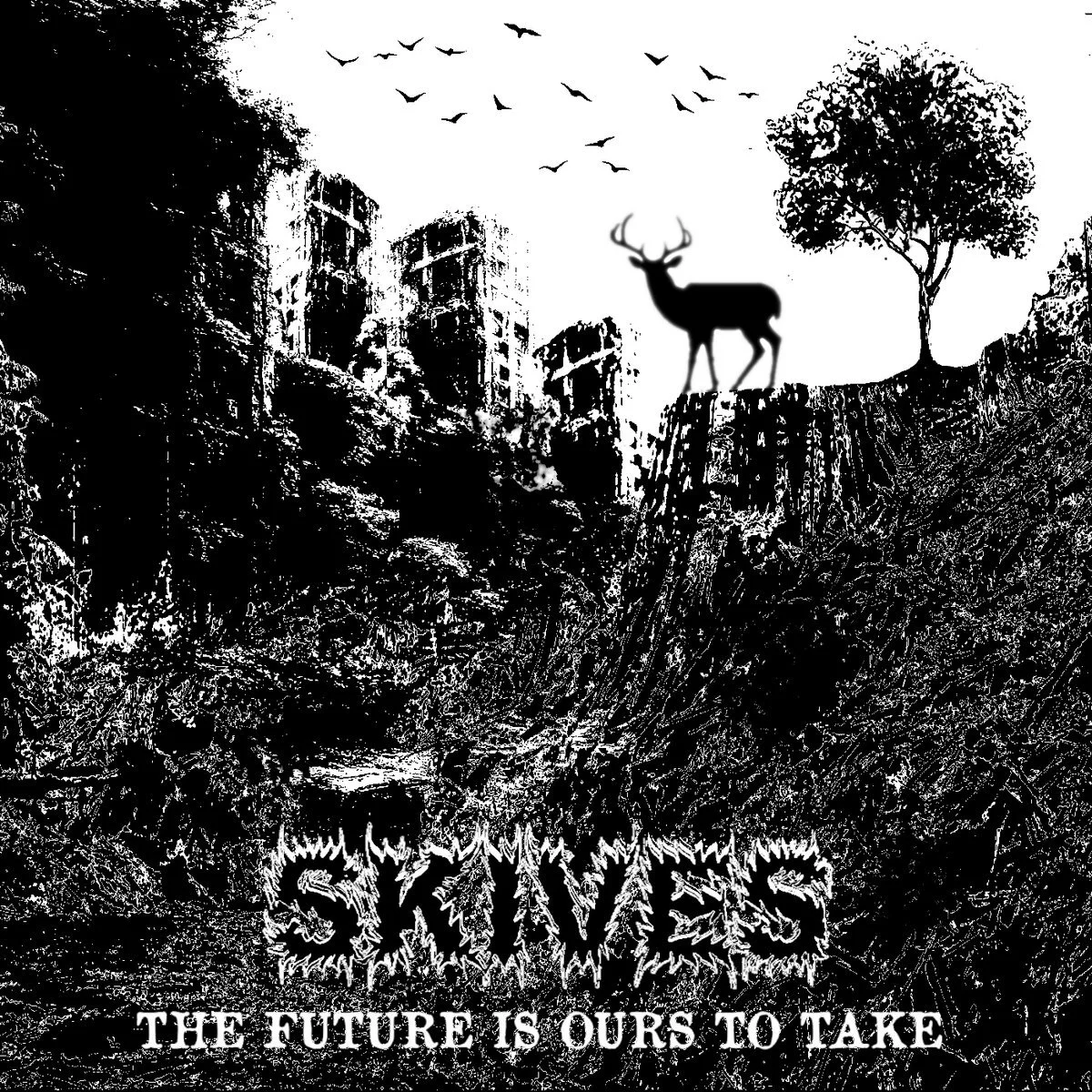
GRAB SKIVES’ “The Future is OUrs to Take” on digital Now!
Bandcamp can be found below.