
SILAKBO
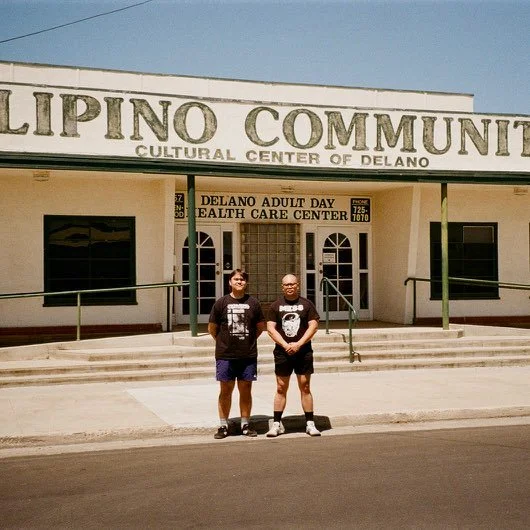
“The essence of veganism, to me, is recognizing that I am not above anything in this world. I exist within it alongside my fellow living beings. It’s an extension of straight edge to me, because it’s me being mindful of the things I consume and the relation to others.”
This is Romeo and Nilo from San Francisco. Vocalist and bassist respectively, but we also are the songwriters for the band Silakbo.
Silakbo is an anti-imperialist vegan straight edge band that merges industrial with hardcore, intertwined with lyrics and themes of national democratic and liberatory politics.
What was the moment or experience that first pushed you toward veganism?
R: In hardcore, it was hearing Earth Crisis and Gather around the same time.
In real life, the men in my family have a history of health problems. So the bands informed the ethics and my family informed the health benefits.
N: I think the first moment for me was just putting the dots together of where the food we consume comes from, sometime as a kid. Being taught that it’s a “necessary action” to consume animals, but never being taught or informed of an alternative until becoming a teenager.
Did your path into veganism come before or after getting into hardcore / straight edge?
R: After. I don’t think I would have considered it if my mind wasn’t already exposed to other alternative lifestyles.
N: I became vegan after finding hardcore, like maybe 2 or 3 years after? Something like that.
Was there a specific band, record, or scene influence that opened that door for you?
R: Refused, Rage Against the Machine, and Bad Religion are bands that made me question everything I was taught. Then hearing Earth Crisis - Destroy the Machines and the Gather demo is probably influenced me the most in being vegan.
N: The two bands that opened those doors for me were Youth of Today and Dropdead, the songs “No More” and “Unjustified Murder” respectively. I always site those bands as the ones that got me to go vegan.
How did your friends, family, or local scene react when you made that shift?
R: Mom sort of freaked out at first but was then very supportive. Dad was, too. Since we’re Filipino, my mom and dad just found ways to incorporate more veggie dishes. I think it’s a misconception that Filipino food is meat heavy. The American canon of it might be, but there’s so many dishes in Filipino food that are vegetable centered where you can just swap a meat for tofu or a plant based substitute and it’s pretty much the same.
N: I went vegan in 2021 during the pandemic, which I recognize is somewhat recent. Among my friends it was supportive. Being Filipino makes it definitely interesting since a lot of food is meat based, but there’s also a lot of vegetable-based foods so it’s just about making modifications. My mom was worried at first for sure, but got over it after a while. My dad and extended relatives were pretty surprised and would definitely poke fun for a long time, but I think realized recently that this going to stick haha. My relatives have a history of gout, high blood pressure, diabetes, etc., so they knew it was a positive change when they realized my personal health got a lot better over time.
Was it an immediate commitment, or something you grew into over time?
R: I cut stuff out one by one. Stopped eating red meat, then white meat, then seafood, etc.
N: It’s something I grew into over time. I was vegetarian for a year before committing to vegan.
For you, how connected are veganism and straight edge—are they inseparable or distinct choices?
Do you see veganism as an extension of straight edge ethics, or its own independent stance?
R: For me, veganism and straight edge are inseparable.
The essence of veganism, to me, is recognizing that I am not above anything in this world. I exist within it alongside my fellow living beings. It’s an extension of straight edge to me, because it’s me being mindful of the things I consume and the relation to others. A steak on a plate was once a living animal, that was slaughtered by an exploited slaughterhouse worker. Cocaine people use was most likely trafficked here using inhumane labor. In this system, no one is perfectly ethical. But you can do your best.
N: To me they are both linked and separate. They are distinct in that they have different targets, but are also inseparable as both for me are tied to my commitments of being against exploitation as a whole.
Being vegan and straight edge to me should also mean to be anti-capitalist and anti-imperialist, as profit is a major motivator of the oppressor, even if it’s at the cost of lives. Whether it’s indigenous people in foreign countries fighting for self-determination and liberation, animals who are raped and murdered in the unsafe confines of factory farms, the plunder of the planet, or the toiling worker who poisons themself as a result of their exploitation - these struggles are interlinked internationally, and we must do everything we can to fight back in favor of a better world.
How do you respond to people in the scene who embrace one but not the other?
R: I don’t think I’m better than them. Most people I know don’t actually disagree. Example, I have straight edge friends who aren’t vegan, but don’t necessarily disagree. They just don’t subscribe to the lifestyle. But I’m always open to discuss why both matter to me, as long as it’s in good faith.
N: As far as how I respond to folks that are one but not the other, I think in short terms it’s ultimately a choice. Some of the greatest revolutionaries in history were not vegan and/or straight edge, but I do think that it is an immediate thing someone can do. But with that being said, you can’t just be vegan or straight edge to oppose exploitation.
What role did the hardcore/metal scene play in shaping your beliefs?
Do you feel like the scene today is more or less aligned with vegan values than when you started?
R: It’s where I got my lens to see the world. It taught me that another world is possible. Not just possible, but necessary in order for us to thrive. I wish more people had an outlet like screaming into a microphone or writing songs.
I feel like when people started to come back to shows post-shelter in place, it was kinda all over the place ideologically. And that’s fine. We were cooped up for a couple years and we had all this pent up energy. But now people are searching for a message. 90s and early 00s vegan edge type shit is popular and kids are starting new bands, putting their own spin on old but still relevant messages.
N: Admittedly, hardcore played a massive part in shaping my beliefs and values. Finding straight edge and veganism is what helped develop my beliefs and politics.
I don’t know if the scene today is more or less aligned with those values, especially in terms of veganism. I think there’s more representation, but I don’t think the scene was really ever aligned with these values. In a world where a lot of fucked up shit happens, hardcore shows/scenes are quite literally no exception to that. For example, misogyny and bigotry are still problems in both the “outside world” and the scene, no matter how swept under the rug; don’t let anybody tell you there isn’t a correlation between the way people treat women, or even each other, versus how people treat animals.
What kind of impact do you hope your band has on listeners?
Have you ever heard from someone who changed because of your music?
R: I hope we can get people to question the world around them, and to inspire them to take concrete action. Not just engage passively with our music.
Our band doesn’t play super often, but when we do, we plays equal parts hardcore/punk shows and political events. Our band comes from a Filipino liberation perspective, so we’ve had a lot of people tell us that our music captures the anger which might not come across in other forms of Filipino music. Joy and good vibes are cool, but you can and should be pissed off as well.
N: The impact I hope this band has on listeners is that it opens their eyes to problems in this world that affect them and other people around the world every day, but that they can also be part of the change to flip the script (organizing, direct action, being an internationalist, etc).
I don’t think I’ve met anyone who’s gone vegan or “changed” simply from listening to our music, but I’d like to think that we’ve been able to encourage people to organize in their communities and learn more about the world around them and the problems within it.
Do you think music can genuinely shift people’s behavior, or just reinforce existing beliefs?
R: I would not be a political or value driven person if it wasn’t for music. And I’ve been vegan for 21 years and straight edge for 23 now. So music has both shifted my behavior and reinforced my beliefs.
N: I feel that music can do both, and whichever one a specific band or song does is based on the execution of the intent or messaging. It can definitely reinforce an “echo chamber” type of reaction, but the beauty of music is that it can reach people who otherwise would not engage with a vegan or revolutionary message. For example, someone may enjoy the music but might be confronted by the messaging initially, which can force them to think critically, or maybe introspectively, about what they once understood as true.
Do you see veganism as inherently political?
R: Yes. Lifestyles tend to have a left, center, and right position within them. There are vegans who hate humans as a whole for what they do to the earth. There are vegans who don’t care about anything but being vegan. Silakbo believes in veganism as an extension of a liberatory and anti-oppression politic. Veganism as part of the greater struggle for liberation for all oppressed beings. That does not mean it’s any less important as all the other stuff.
N: Veganism, and with that vegan straight edge, to me is inherently political. Like I touched on in a previous response, to be vegan straight edge to me also includes being anti-capitalist and anti-imperialist, and how all struggles around the world - women, worker, animal, child, indigenous, etc. - are interlinked, and also affected by the same basic problems of imperialism, feudalism, and capitalism (especially in particular, bureaucrat-capitalism).
How do you balance music with direct action or activism, if at all?
R: For the last 15 years, I’ve organized in various capacities with BAYAN USA, an umbrella alliance of various organizations fighting for the national liberation of the Philippines. In the same way veganism is an extension of straight edge to me, anti-fascist politics are an extension of vegan straight edge. Being vegan taught me to care about those other than myself and those who might have different struggles than my own. That extends to my organizing. We are all oppressed in different ways under fascism but, no matter the class, race, gender, and species, we are oppressed. They all relate to me. The person working in the slaughterhouse killing cows all day is most likely not making a living wage and is probably mentally unwell from daily death. The farmer in the Central Valley who picks our fruits and vegetables has to deal with terrible weather and back breaking working conditions. I have to shout out my comrade Gilbert “Egg” Santos, who passed away a couple years ago. He was an organizer and cultural worker with UGATLahi in the Philippines but also linked being vegan with those politics. He helped me form a comprehensive analysis about all of this stuff.
N: To me music is a really great tool to show people these beliefs we and many other people carry. An important part to us is tying our politics and ethics as a band to something tangible, namely local organizing efforts that we align with.
I don’t take part in vegan/animal rights activism personally, however I too have organized in different capacities with organizations under Bayan USA and Anakbayan USA in the past few years, and currently do broad solidarity work under ICHRP USA (International Committee for Human Rights in the Philippines) via a local organization PUSO (Philippine-US Solidarity Organization). As a band we try to platform organizations such as Bayan USA, Anakbayan USA, Gabriela USA, ICHRP USA, etc. Using music is a way to meet people who aren’t already involved in these politics/ethics where they are at in a way that is digestible and approachable.
What issues within the broader movement do you think aren’t being talked about enough?
R: I’m not sure. There’s plenty of infographics on IG about anything and everything. People don’t talk about the band Time For Change from Pomona/IE as much as they should.
N: I think the main issue within the broader vegan movement is a lack of embracing of other revolutionary views, anti-imperialism in particular. I’ve seen it appear more among our group of friends, but I’ve still seen discourse from vegans that separate politics from veganism; ive made similar points throughout this interview, but the struggles of animals in a factory farm and the struggles of the toiling worker in the factory are interlinked.
Looking back, would you approach your message differently?
R: Veganism? Not really. I also feel that it’s fine to make mistakes as long as you learn from them. If you maybe isolated someone with your ideology, maybe you can work out a better way to approach it next time. Or the person you were trying to reach just won’t have it. Either way, you learn.
N: I personally have no regrets. I agree with our methods of approaching how we carry our message. The music is for everyone at the end of the day, and we try to bring to everyone - from hardcore kids to political organizers alike.
What keeps you committed when it gets difficult or isolating?
R: I am vegan and straight edge because I believe in those ideologies as much as I ever have. We’re usually in the minority anyway, so it’s kinda naturally isolating. But I stay committed because I truly believe it’s a good way to live and to put values into practice.
N: What keeps me committed is knowing that I truly am not in this alone, and that we’re all in this together. I don’t believe in being overly-positive at all, but I do believe in having strong optimism in not letting isolation get to me, especially within things that are naturally so isolating.
Where do you see the vegan / straight edge movement going in the next decade?
R: Wherever the people wanna move it. I think society as a whole is going to have to grapple with whether or not eating meat for every meal, which you had no idea how it ended up on your plate, and which took so many resources, is a good idea for a planet that is heating up every year and might cook us.
N: It’s hard to tell, and I guess that’s the funny part about foresight vs hindsight. I try not to think too hard on this honestly beyond hoping more people go vegan or straight edge. If I’m being honest, I’d much rather see broader and stronger anti-imperialist internationalist front, a free Palestine, and an end to us imperialism in the Philippines in the next ten years first.
What would you say to someone on the fence about embracing these ideas?
R: Listen to different points of view on veganism. Honestly, listen to people who talk shit on it just as much as you’d listen to Elegy or whoever. Then decide for yourself. If something is supposed to be a commitment, approach it as such.
N: Take advantage of your position. Really think about these decisions, changes like going vegan or edge can be hard when you’re somewhere on the opposite end. Talk to and listen to people in your community, know that your friends will be there to support you like you would them.
Final Thoughts:
First band that made you think differently:
R: Refused. Rage Against the Machine. Bad Religion.
N: Youth of Today. first band for everything for me honestly.
A lyric you’ve written (or heard) that still hits hardest:
R: “Blood and sweat mixed into soil, no longer will my people toil” from our song “Blood, Sweat, and Soil”
N:“Their success echoes through your compliance” from the song “Willing Victim” by The Swarm.
One misconception about vegan / vegan straight edge:
R: People are surprised that I’m not skinny. Vegans come in all shapes and sizes.
N: An obvious one but yes we get enough protein, man. Fucking hell, Romeo and I are both huge and lift. And yes, we enjoy our food too. We eat “clean” like bok choy and extra firm tofu, but we also enjoy bullshit like Takis and excessive caffeine.
One non-negotiable value:
R: Listen to Dead in The Dirt
N: Like Romeo said, listen to Dead in the Dirt. fuck it listen to Dropdead too.
One thing the scene needs to do better:
N: Don’t make hardcore your end point when it comes to being involved with your politics and/or community. hardcore should be used to platform politics, but your politics shouldn’t be for hardcore if that makes sense. It should be carried out in your daily life. Be about what you claim.
Also do better with how we treat each other, especially women and queer people. non-men deserve the same amount of respect and equal treatment as everyone else.
R: Take the ideas you learn from hardcore and organize in your local communities. In a time of rising fascism, we all need to come together.
Justice for the Negros 19. Power to C&H workers striking for a fair contract.
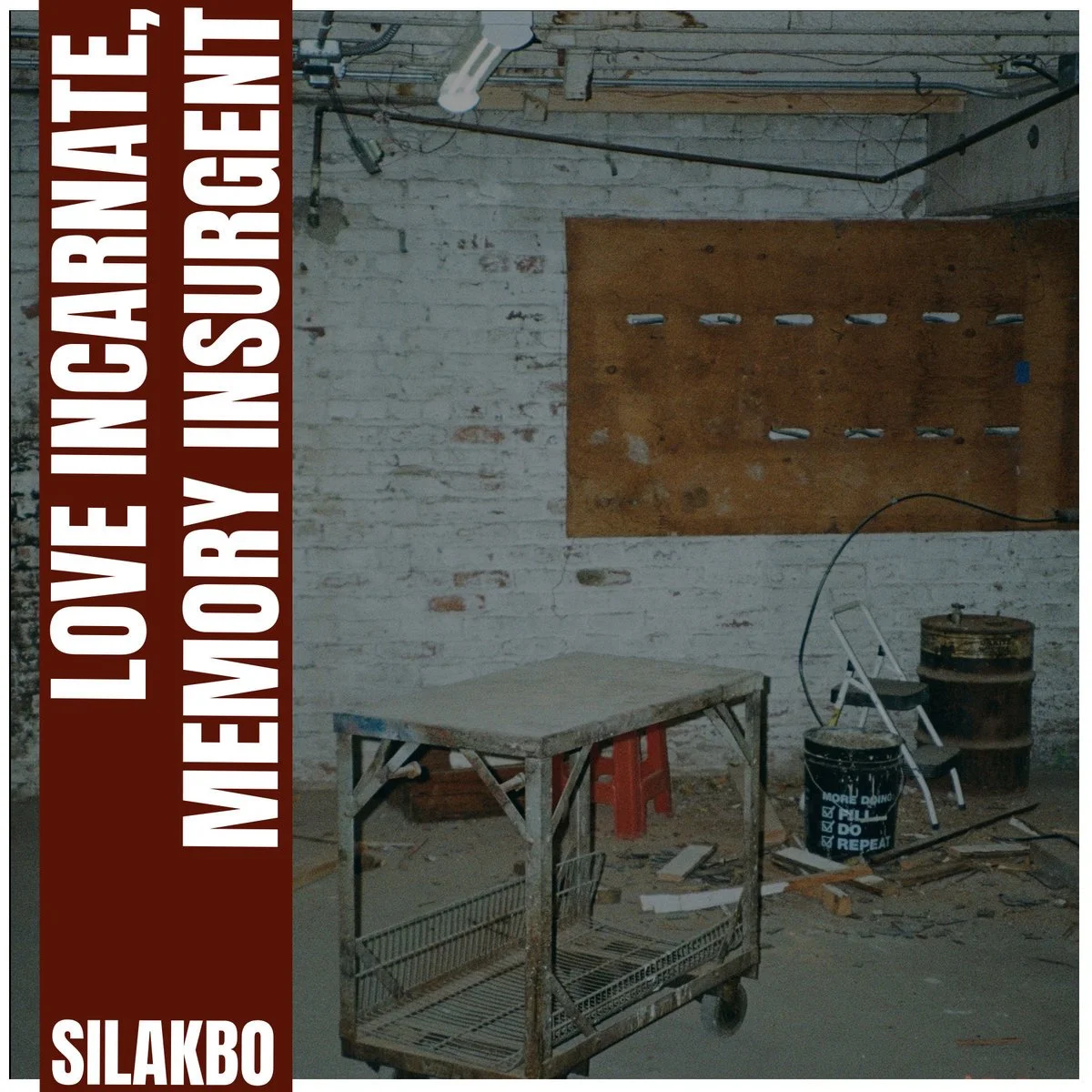
Stream “LOVE INCARNATE, MEMORY INSURGENT” BY SILAKBO NOW!
Bandcamp can be found below.